
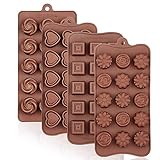
- Top Pick: Chocolate Molds Silicone – Set of 6 – Non-Stick & Food Grade – Free eBook
- Best Value: Chocolate Bar Mold,Non-Stick Chocolate Molds,100% Food Grade Silicone Mold
- Premium Choice: La chat 4 Packs Silicone Molds for Chocolate, Food Grade no-stick Baking, candy and butter Mold with different shape (4 packs different style)
After cracking dozens of batches between two and five stars, the one thing that separates a silicone chocolate mold worth keeping from one you will toss is how it handles the pop. Not the release—almost every mold releases when the chocolate is properly tempered and fully set. I mean the pop: pressing the back of the cavity without the chocolate cracking, the shape distorting, or the cavity tearing along a seam. That single behavior is the reason some of these molds go into a permanent rotation and others get abandoned in a drawer after two projects.
The second differentiator is depth. Shallow cavities look fine in listing photos, but once you add inclusions—crushed pistachios, freeze-dried raspberry, flaky salt—the chocolate bridges over the cavity and you end up with a flat, hollow disc that looks nothing like the molded shape. For anyone searching for the best silicone chocolate molds for candy making in 2026, the buying decision is really about matching cavity geometry to your filling style, not about brand recognition.
As an Amazon Associate we earn from qualifying purchases at no extra cost to you.




Quick Picks
| Product | Best For | Price |
|---|---|---|
| Chocolate Molds Silicone Set of 6 | Variety and learning basic shapes | $9.99 |
| Chocolate Bar Mold (Non-Stick) | Lowest price per mold | $4.38 |
| La chat 4 Packs | Mixed media: candy, butter, baking | $7.99 |
| Puyeipt Mini 2 Pack 60 Cavities | Bulk truffles and bite-size bonbons | $6.99 |
| Fimary Deep Bar Mold | Loaded bar fillings and Dubai-style pistachio | $5.99 |
| Pimoys Flower & Bow 4 Pcs | Decorative gift boxes and wedding favors | $6.99 |
| Flower Silicone Molds 6 Pcs 15-Cavity | Consistent floral shapes at scale | $8.99 |
| Lerykin Semi Sphere 2 Packs | Half-sphere bonbons and jelly molds | $8.99 |
How We Picked
Three criteria drove every ranking in this roundup. First, cavity wall thickness: molds under roughly one millimeter tend to flex too aggressively during release, splitting thin chocolate shells. Second, true non-stick surface texture versus marketing claims—some molds only feel non-stick on the first two uses before residual cocoa butter glazes the surface. Third, geometry honesty: listing photos that exaggerate cavity depth relative to overall mold dimensions. A mold that is genuinely deep earns its place; one that looks deep in a rendered image does not.
The 8 Best Silicone Chocolate Molds For Candy Making in 2026
Chocolate Molds Silicone – Set of 6
This set is the right starting point if you want to explore multiple shape families before committing to one style. Six molds cover bars, squares, domes, and a few novelty silhouettes, so you can identify which geometry actually gets used in your kitchen.
- Six different shapes in one purchase eliminates early guesswork.
- Food-grade silicone that held up well across repeated dishwasher cycles.
- Included eBook adds recipe context for beginners.
- Cavity walls on the dome mold flexed slightly too much, causing a few bonbons to crack on release.
Skip this if you already know exactly what shape you need and want fewer, better pieces.
Chocolate Bar Mold – Non-Stick Food Grade
At $4.38 this is the cheapest mold in the roundup, and for a basic segmented bar it delivers. The rectangle cavities are shallow enough for clean snapping but wide enough to hold a thin nut or seed layer without bridging.
- Lowest cost per mold in the category.
- Simple geometry means fewer flex points and less cracking risk.
- Only one shape per mold—no variety without buying multiples.
- Surface texture felt slightly tacky after the third unmolding cycle.
Skip this if you need decorative shapes or plan to make anything beyond flat bars.
La chat 4 Packs – Different Shapes
Four molds, four shapes, priced at $7.99 total. This is the value pick for people who also want to use the molds beyond chocolate—butter portions, jelly cubes, small cake toppings. The shapes are practical rather than ornamental, which makes them easy to fill and release.
- Four distinct styles in a single pack.
- Works across candy, baking, and butter molding without flavor transfer.
- Cavities are moderate depth; heavy inclusions like whole nuts can bridge.
- Shape variety means you may use only two of four molds long-term.
Skip this if you specialize in one shape and want repeated cavities of that geometry.
Puyeipt Mini Silicone Chocolate Molds – 2 Pack, 60 Cavities
Sixty tiny cavities across two molds is the highest count in this roundup. The mini size suits truffle-coating work, bite-size bonbons for parties, or layered fruit-and-chocolate bites. Because each cavity is small, chocolate sets faster and the release is forgiving.
- Thirty cavities per mold—ideal for batch production.
- Small volume per cavity means lower chocolate usage per project.
- Mini size is impractical for anything you want to hand-dip or fill generously.
- Filling sixty tiny cavities individually is slow without a piping bag and patience.
Skip this if your goal is chunky bars or single-serve bonbons with visible fillings.
Fimary Chocolate Bar Mold – Deep, Food Grade
Explicitly designed for loaded bars—thick pistachio-knafeh layers, cookie butter swirls, caramel chunks—the deep cavity is the real story here. Fillings sit below the surface without bridging, and the final product photographs cleanly from the side.
- Genuinely deep cavity handles heavy, chunky inclusions.
- Named use case (Dubai pistachio bars) matches current demand.
- Only one mold in the package—less value than multi-pack competitors.
- Deep cavities require more chocolate per bar, raising ingredient cost.
Skip this if you prefer thin, delicate bonbons or want to minimize chocolate consumption.
Pimoys 4 Pcs – Flower & Bow
Decorative shapes for gift-givers and event favors. The petal and ribbon details are shallow-relief rather than deep-molded, which means they pick up fine detail when you use properly tempered dark chocolate but lose definition with milk or white chocolate, which are softer.
- Flower and bow silhouettes look polished in a box or on a table setting.
- Four pieces let you run a small production batch.
- Shallow detail means tempering precision matters more here than in any other mold on this list.
- Not suited for filled or layered candies—the relief is decorative, not structural.
Skip this if you plan to add fillings or work primarily with compound coating.
Flower Silicone Molds – 6 Pcs, 15-Cavity
Nine flower cavities across six molds—more count than the Pimoys set at a similar price point. The flower shape here is a simple five-petal outline with a slightly domed center, easier to fill and release than complex rose forms. Good for consistent, repeatable output.
- Ninety total cavities across the set for bulk runs.
- Simple petal geometry tolerates imperfect tempering better than high-relief molds.
- Six identical molds offer less variety if you want mixed shapes.
- Domed center makes flat layering difficult on top of cake frosting.
Skip this if you need varied shapes in one purchase.
Lerykin Small Semi Sphere – 2 Packs, 15-Cavity
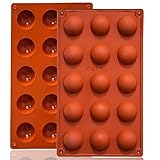
Half-sphere molds are the backbone of any bonbon or jelly work because they produce a clean curved surface that pairs with a second half to make a sealed sphere. Fifteen cavities per mold is a sweet spot for testing two or three fillings per session without waste.
- Curved geometry creates a glossy dome with no air bubbles when tapped properly.
- Two packs let you make full spheres or run parallel experiments.
- Sealing two halves together requires careful heating of the rim—common frustration for beginners.
- Small diameter limits filling options to dense, low-volume stuffings.
Skip this if you dislike the extra step of joining two halves or want one-shot molding.
Buying Guide
Cavity Depth vs. Filling Ambitions
Match depth to density. A cavity four to six millimeters deep handles nuts, cookie pieces, and thick caramel without the chocolate arching over the top. Anything below three millimeters is strictly for flat bars or solid molded pieces with no inclusions. If you plan loaded bars, the Fimary deep mold is the clearest example of depth earning its price premium.
Wall Thickness and Release Behavior
Thick walls resist the pinching that cracks a shell. When a mold feels floppy in your hands—walls that fold flat when you squeeze—expect cracked bonbons. A firmer gauge silicone releases with a clean push, no pressure needed on the sides. The 60-cavity mini molds here are thin by necessity, which is why they work best for very small volumes where the chocolate shell is inherently sturdy.
Surface Finish and Release Durability
A truly non-stick surface will not require cooking spray. If you notice chocolate clinging after a batch or two, the finish is either too rough or the silicone was blended with filler that migrates to the surface with heat. Food-grade, platinum-cured silicone outlasts peroxide-cured options by dozens of cycles, and the price difference between the two is small enough that filler-blended molds are rarely worth saving money on.
Our Verdict
Top pick: the Fimary Deep Bar Mold at $5.99. It solves the most common failure in homemade bar making—bridging over fillings—and does so for less than most single-shape competitors.
Budget pick: the basic Chocolate Bar Mold at $4.38. If you only need flat segmented bars and want the lowest entry cost, it does the job without fuss.
Condition where another mold wins: if you produce bulk bite-size candies for events or truffle coating, the Puyeipt Mini with sixty total cavities outperforms every other option in throughput per dollar.
FAQ
Do I need to oil or spray silicone chocolate molds?
No. Properly food-grade silicone is inherently non-stick when chocolate is correctly tempered. Adding oil actually prevents the chocolate from adhering to the mold surface, which means your pieces will lose their glossy shine.
Can I use a silicone chocolate mold for things other than chocolate?
Yes. The same flexibility and non-stick properties work well for gummies, butter portions, ice cubes, and layered jelly desserts. The La chat 4-pack is explicitly marketed for this cross-use.
How many times can a silicone mold be reused?
Quality platinum-cured molds survive hundreds of cycles with no noticeable degradation. Signs that a mold is nearing the end include persistent stickiness, discoloration from cocoa butter buildup, or visible micro-tears at cavity edges.
Is compound coating easier to use than real chocolate in these molds?
Yes. Compound coating does not require tempering, so release is more forgiving and less sensitive to room temperature. If you are new to silicone molds, start with compound to build confidence in the pop-and-release step before moving to tempered couverture.
Write Your Review
No reviews yet. Be the first to share your experience!