
A board game is an easy Christmas gift to buy badly. Pick something aimed too young and the adults drift toward the kitchen; pick a heavy strategy box and the youngest players are stuck watching other people take turns. The real decision is finding one game that a ten-year-old, a parent and a grandparent can all sit down to on Christmas evening, learn in minutes, and still be enjoying when the leftovers come out. That fit matters more than a famous name on the box.
This guide is for anyone buying for a mixed-age household: parents shopping for their own family, grandparents choosing for grandchildren, and relatives who want one shared gift instead of separate presents. Every pick below is a complete game that works with children and adults at the same table. The games were chosen from the names and specifications on their Amazon product pages, with player counts, age ranges and playing times taken from those listings rather than from memory.
Quick Picks
As an Amazon Associate we earn from qualifying purchases.
| Product | Best for | Key spec from title |
|---|---|---|
| Ticket to Ride (2025 Refresh) | A first strategy game for the whole family | Ages 8+, 2-5 players, 30-60 minute playtime |
| Azul | Mixed ages who prefer calm, clever play | Ages 8+, 2-4 players, 30-45 minute playtime |
| Kingdomino | Young children playing alongside older siblings | 2-4 players, domino tile-laying kingdom building |
| Codenames | Big gatherings that split into two teams | 2-8+ players, 15 minute rounds |
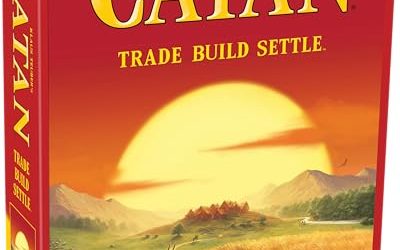
| CATAN (6th Edition) | Families ready for trading and negotiation | Ages 10+, 3-4 players, 60-90 minute playtime |
How to Choose
Match the Age Span at the Table
The age printed on a box describes the youngest player who can genuinely take part, not a marketing suggestion. A game marked eight and up usually works when the youngest child reads a little and can hold a small hand of cards, while a ten-and-up strategy title expects trading, planning and losing gracefully. Think about the actual spread in the family you are buying for. If a confident seven-year-old will insist on joining, a tile game with no reading, such as Azul or Kingdomino, keeps her involved, whereas a word game will quietly leave her out.
Count the Players Who Will Actually Sit Down
Christmas gatherings swell and shrink without warning, so the player range on the box matters as much as the game itself. A two-to-four-player title suits a small household but strands the extra cousins who arrive on the day. Team games stretch furthest: Codenames absorbs a crowd by splitting everyone into two sides, so nobody spectates. At the other extreme, CATAN needs at least three players before its trading works at all, which makes it a risky gift for a couple with one child. Match the box to the family’s ordinary evenings, not the biggest party of the year.
Weigh Play Time Against the Evening
A stated playing time is the length of one full game once everyone knows the rules, and first plays run longer. Fifteen-minute rounds, like Codenames, can fill the gap between dinner and dessert and be repeated until people tire of them. A thirty-to-sixty-minute game such as Ticket to Ride anchors a whole evening comfortably. Ninety minutes of CATAN is a commitment that suits a quiet Boxing Day afternoon far better than a crowded Christmas night with tired children. Choose the length that matches when the family realistically plays, not the length you wish they had.
Look for Replay Value in the Box
A gift game earns its place on the shelf by changing from one play to the next. Variable setups help most: CATAN rebuilds its island from loose tiles, Ticket to Ride deals different route tickets, and Codenames shuffles a fresh grid of words with a new key card each round. Games where the puzzle renews itself, like the tile drafting in Azul, also survive repetition because opponents keep disrupting your plans. Be wary of novelty games built around one joke or one reveal; they delight on Christmas Day and gather dust by February.
The 5 Best Options
Ticket to Ride (2025 Refresh)

Ticket to Ride suits families who want a proper game rather than a novelty, without a long rules explanation standing between the wrapping paper and the first move. Players collect train cards and claim routes across a map of North America, connecting cities named on their ticket cards for points. Children from about eight can follow the draw-or-claim choice on every turn, while adults still get genuine decisions about which routes to block and when to risk a longer connection. With five seats and turns that keep moving, nobody waits long, and a full game fits inside an hour.
Specs
- Players: 2-5
- Manufacturer recommended age: 8 years and up
- Playing time: 30-60 minutes
- Brand: Asmodee
- Edition: 2025 Refresh
- Game style: cross-country train route-building strategy
Best for: families buying their first modern strategy game.
Watch out for: the 2025 Refresh is a newer listing than the long-running Days of Wonder edition, so check the edition named on the listing before ordering.
ASIN: B0F8PKN4B7
Azul

Azul is the quiet achiever of this list, a tile-drafting game that looks beautiful on the table and asks more of players the longer it goes. Everyone takes turns selecting coloured tiles from shared displays and fitting them into a mosaic pattern on their own board, scoring for completed rows and columns while wasted tiles cost points. There is no text to read during play, which helps younger children and grandparents alike, yet the decision of which tiles to take, and which to leave for an opponent, keeps experienced players fully engaged.
Specs
- Players: 2-4
- Manufacturer recommended age: 8 years and up
- Playing time: 30-45 minutes
- Manufacturer: Plan B Games
- Model number: NMG-600010EN
- Game style: tile-placement mosaic strategy
Best for: mixed-age tables that prefer calm, clever play over direct confrontation.
Watch out for: several Azul spin-offs and expansions carry similar names, so confirm the listing is the original base game rather than Crystal Mosaic or Stained Glass of Sintra.
ASIN: B077MZ2MPW
Kingdomino

Kingdomino shrinks the appeal of a kingdom-building game into something a family can finish between dinner and dessert. Players draft domino-style tiles showing fields, forests, lakes and mines, then place them around their castle to build a small five-by-five kingdom, matching terrain types so crowns on the tiles turn into points. The matching rule is simple enough for children around eight, turns take seconds, and because everyone builds their own board there is little direct conflict to upset younger players. It also packs away small, which suits a gift that has to travel home in a suitcase.
Specs
- Players: 2-4
- Manufacturer recommended age: 8 years and up
- Brand: Blue Orange Games
- Model number: 03600
- Game style: domino tile-laying kingdom building
Best for: younger children playing alongside older siblings and parents.
Watch out for: the base game seats four at most, so check the player count on the listing before assuming the whole gathering can join a single game.
ASIN: B01N3A4070
Codenames

Codenames turns the whole table into two teams, which makes it the strongest choice here when cousins, in-laws and older children all want in at once. Each team’s spymaster studies a grid of twenty-five word cards and gives one-word clues meant to point at several of their own agents while steering clear of the assassin card. The guessing sparks the kind of table talk that fills a room, and rounds are short enough to run several back to back. Because it runs on vocabulary and word associations, it flatters teenagers and adults most.
Specs
- Players: 2-8+
- Playing time: 15 minutes
- Manufacturer recommended age: 14 years and up
- Model number: CGE00031
- Contents: 200 cards with 400 codenames, 40 key cards, timer and card stand
- Game style: team word-association party game
Best for: large Christmas gatherings with teenagers and adults.
Watch out for: the age guidance skews toward teenagers, and the team format needs at least four players to work properly, so it fits a household of three poorly.
ASIN: B014Q1XX9S
CATAN (6th Edition)

CATAN is the gift for a family ready to graduate from light games to something with negotiation in it. Players settle an island of hexagonal tiles, collecting brick, wood, wheat, sheep and ore from the land around their settlements, then trading with each other to build roads, villages and cities toward ten victory points. The trading gives teenagers and adults plenty to argue about in the best way, and the island is rebuilt from loose tiles every game, so no two sessions settle the same way. It asks more time and patience than anything else here.
Specs
- Players: 3-4
- Manufacturer recommended age: 10 years and up
- Playing time: 60-90 minutes
- Model number: CN3081
- Edition: 6th Edition
- Game style: trading and settlement-building strategy
Best for: families with children ten and up who enjoy planning and bargaining.
Watch out for: the base game covers three to four players only, the five-to-six player extension is a separate purchase, and a full game needs an uninterrupted hour or more.
ASIN: B0DYK1ZH2D
Which One Fits Your Situation
Buying for Grandparents to Give Grandchildren
Grandparents often want one box that guarantees time together rather than another toy that gets played with alone. Ticket to Ride is the safest present in that position: the rules take minutes to explain, the train theme offends nobody, and five seats mean the givers can join the first game themselves on Christmas evening instead of watching from the sofa.
A Household With Children Under Ten
When the youngest players are seven or eight, the gift has to work without reading and without long waits between turns. Kingdomino fits that household best, because matching picture tiles is understood at a glance and every child builds a kingdom of their own. Azul follows closely for slightly older children who enjoy a puzzle, since its tiles carry no text either.
A Big Gathering of Teenagers and Adults
Extended-family Christmases produce more players than most boxes allow, and leaving people out of the gift game feels wrong. Codenames solves the headcount by dividing the whole room into two teams, so ten people can play as easily as six. Its short rounds also let latecomers join the next game without waiting for a long session to end.
A Family That Already Owns the Classics
Some households already have the famous train game and the famous island game on the shelf, and a duplicate helps nobody. Azul is the thoughtful alternative for them: it is widely owned by keen players yet missing from many family collections, it looks handsome enough to leave out on a side table, and its quiet tile puzzle plays very differently from route building or trading.
Common Mistakes
- Buying for the age of the oldest child and forgetting the youngest, who then spends Christmas evening watching instead of playing.
- Choosing a game that needs more players than the family has, so the box cannot be opened until guests arrive.
- Ignoring the playing time on the box and handing a tired family a ninety-minute strategy game at the end of Christmas Day.
- Picking an expansion or spin-off by mistake when a similar name hides the fact that the base game is required.
- Giving a heavily competitive game to a family with a sore loser, when a gentler tile or team game would have kept the peace.
Frequently Asked Questions
Which of these games can a seven-year-old genuinely play?
Kingdomino is the most realistic choice, because its turns rest on matching pictures of fields, forests and lakes rather than reading or counting large numbers. Azul can also work for a mature seven-year-old with an adult nearby, since the tiles carry no text. Ticket to Ride, Codenames and CATAN will mostly frustrate a child that young, whatever the family hopes.
What is the best pick when ten relatives want to play together?
Codenames handles that crowd most gracefully, because everyone present simply joins one of two teams and the spymasters carry the structure of the round. The other games here seat four or five at most, so a gathering of ten would need two different games running at once or a rotation between rounds, both of which leave someone waiting.
Are any of these games suitable for two players on quieter evenings?
Yes, three of them play well as a pair. Azul becomes a tight, almost chess-like contest with two, Kingdomino stays brisk and pleasant, and Ticket to Ride works with two although its map feels roomier. Codenames really needs four or more for its team format, and CATAN requires three before its trading economy functions at all.
How do I avoid buying a game the family already owns?
Ask a casual question before ordering, or check with a parent or sibling who knows the family’s shelf. Failing that, choose the less obvious title: many households own Ticket to Ride or CATAN already, while Azul and Kingdomino are more often missing. Keeping the receipt also matters, because an unopened duplicate is far easier to exchange after Christmas than a played one.




Write Your Review
No reviews yet. Be the first to share your experience!