
Freight preparation starts with a number that has to be right. A pallet that weighs more than the paperwork says can be refused at the dock, loaded in the wrong place, or sent with the wrong freight class. A pallet that weighs less than expected can point to a short shipment or a missing carton. A pallet weighing scale placed where freight is prepared turns that check into a normal step, not an extra trip across the warehouse.

This guide covers pallet weighing scales for freight preparation. It explains how to match platform size, capacity, and readability to the pallets you actually ship, and it compares four scales that suit different freight workflows, from a fixed dock station to a pallet jack scale that weighs at the truck.
How to Choose a Pallet Weighing Scale for Freight Preparation
Match platform size to the pallets you handle
A standard pallet needs a deck that holds the full pallet without overhang. A 48 inch by 48 inch platform covers standard pallets and gives the operator room to set the load down straight. Smaller decks suit half pallets and compact loads, but a deck that is too small forces the operator to balance a pallet on the edge, which gives unstable readings and risks damage to the load. Measure the largest pallet you ship, including any overhang from cartons, and choose a deck that covers it with room to spare.
Choose capacity with headroom
Capacity should cover your heaviest pallet plus the pallet itself, with headroom left over. A 5,000 lb capacity covers most general freight pallets. Dense loads, consolidated pallets, and pallets with liquid or metal goods can need 10,000 lb capacity. A scale used near its limit gives readings that drift and wears its load cells faster, so choose a capacity that keeps normal loads in the middle of the range.
Put the display where the operator stands
Freight preparation is fast work, and the operator should not have to step onto the platform or crouch to read the weight. A remote indicator on a post, wall, or cable lets the operator read the weight from a normal standing position. A backlit display helps in a dim dock area, and tare and zero functions should be easy to reach without gloves coming off.
Decide between a fixed floor scale and a pallet jack scale
A fixed floor scale suits a freight preparation station where every pallet passes the same point. The operator drives the pallet onto the deck, reads the weight, and moves on. A pallet jack scale suits freight that is prepared in different places, because it weighs the pallet where it is lifted. It is slower per pallet than a fixed scale, but it removes the trip to a fixed station. Many freight teams use one fixed scale at the main preparation area and a pallet jack scale for overflow and for loads prepared away from the dock.
Top Picks
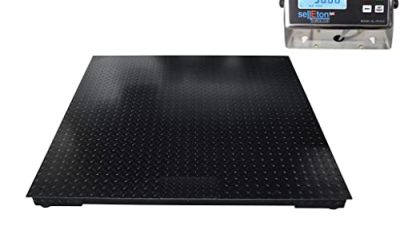
PrimeScales 5,000 x 1 lb Floor Scale Pallet Scale 48″ x 48″
The PrimeScales 5,000 x 1 lb Floor Scale Pallet Scale gives freight preparation a straightforward fixed station. Its 48 inch by 48 inch platform holds a standard pallet, its 5,000 lb capacity covers most general freight, and its 1 lb readability is fine enough to catch a missing carton or an extra case on a prepared pallet.
- 48 inch by 48 inch platform for standard pallets
- 5,000 lb capacity with 1 lb readability
- Fixed floor scale design for a freight preparation station
- Digital indicator for clear weight readings
Best for: Freight teams that want a fixed, full-size scale at the preparation area for every outbound pallet.
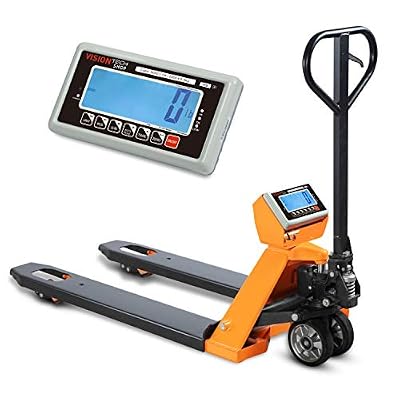
VisionTechShop TPS-1 Pallet Jack Scale
The VisionTechShop TPS-1 Pallet Jack Scale weighs a pallet at the point of lifting, which suits freight prepared away from a fixed station. Its 5,000 lb capacity and 1 lb readability match the fixed scales in this guide, and its 48 inch by 27 inch fork size suits standard pallets. The display switches between lb and kg, which helps when shipping paperwork uses metric units.
- 5,000 lb capacity with 1 lb readability
- 48 inch by 27 inch fork size for standard pallets
- Lb and kg switching for metric shipping paperwork
- Pallet jack design for weighing where the pallet is lifted
Best for: Freight teams that prepare pallets in different areas and want to weigh without moving each pallet to a fixed scale.
PEC Scales Warehouse Heavy Duty Industrial Pallet Floor Scale 48×48
The PEC Scales Warehouse Heavy Duty Industrial Pallet Floor Scale is built for daily industrial use, with a 48 inch by 48 inch deck and a digital display indicator. Listing details describe a 5,000 lb capacity model in this size, with accuracy to 0.5 lb on the larger deck sizes, which makes it a useful choice when freight teams want finer readings on heavy pallets. The steel construction and four load cell design suit a busy floor where pallets arrive by jack and forklift.
- 48 inch by 48 inch platform for standard pallets
- 5,000 lb capacity described for this deck size
- Finer readability described for larger deck sizes
- Digital display indicator with tare and zero functions
- Heavy duty steel construction for warehouse use
Best for: Freight preparation teams that want a durable fixed floor scale with finer readability on full size pallets.
SOCOME 48″x48″ Industrial Floor Scale 10000 lb x 1 lb
The SOCOME 48 inch by 48 inch Industrial Floor Scale brings 10,000 lb capacity to freight preparation, which suits dense and consolidated pallets that would push a 5,000 lb scale to its limit. Its 1 lb readability keeps readings useful for checking against shipping paperwork, and its LED display is easy to read at the dock. The full size deck holds a standard pallet without overhang.
- 48 inch by 48 inch platform for standard pallets
- 10,000 lb capacity with 1 lb readability
- LED display for clear readings at the dock
- Industrial floor scale design for heavy freight
Best for: Freight teams that ship dense, consolidated, or heavy pallets and need capacity headroom above 5,000 lb.
Comparison
| Product | Key Feature | Best For |
|---|---|---|
| PrimeScales 5,000 x 1 lb, 48″ x 48″ | Full size fixed deck, 5,000 lb capacity | A fixed freight preparation station |
| VisionTechShop TPS-1 Pallet Jack Scale | Mobile weighing, 5,000 lb capacity, lb and kg switching | Weighing pallets where they are lifted |
| PEC Scales Pallet Floor Scale 48×48 | Finer readability on a full size deck | Finer readings on heavy pallets |
| SOCOME 48″x48″, 10000 lb x 1 lb | 10,000 lb capacity, LED display | Dense and consolidated freight pallets |
Buying Guide for Freight Preparation
Put the scale at the first pause after packing
A pallet scale works best when it sits at a natural pause in the freight preparation workflow. That pause is usually after packing and labelling, before the pallet moves to staging or loading. If the scale is on that path, every pallet gets weighed. If it is off the path, weighing becomes an extra job that gets skipped when the shift is busy. Walk a pallet through your preparation area and mark the point where it stops anyway. That is where the scale belongs.
Compare the weight with the paperwork every time
The weight alone is not enough. Freight preparation needs a comparison between the scale reading and the expected weight from the packing list or shipping paperwork. A small difference may be packaging or a different pallet. A large difference should trigger a count and a check for damage before the pallet is loaded. Record the date, the shipment, and the weight, and keep that record with the pallet until any difference is resolved.
Check readability against the smallest difference that matters
Readability is the smallest change the scale can show. A 1 lb readability suits most freight preparation, because a missing carton usually weighs more than 1 lb. A finer readability suits dense loads where a small difference in weight points to a missing item. Readability alone does not make a scale accurate, so check it together with capacity and load cell design, not on its own.
Plan for ramps, forklifts, and pallet jacks
A floor scale needs a clear approach. Pallet jacks need a straight run onto the deck, and forklifts need room to set a pallet down without clipping the indicator. A ramp helps when pallets arrive by jack, and a low profile deck reduces the lift needed to get a pallet onto the scale. Leave clear space around the platform, and mount the indicator where forklift traffic cannot hit it.
Frequently Asked Questions
What size pallet scale do I need for freight preparation?
A 48 inch by 48 inch platform covers standard pallets. Measure your largest pallet, including carton overhang, and choose a deck that holds it fully. A deck that is too small gives unstable readings and risks damage to the load.
What capacity is enough for freight pallets?
A 5,000 lb capacity covers most general freight pallets. Dense, consolidated, or liquid loads can need 10,000 lb capacity. Choose a capacity that keeps your heaviest normal pallet in the middle of the range, not at the limit.
Is a pallet jack scale or a floor scale better for freight preparation?
A fixed floor scale is faster when every pallet passes the same preparation point. A pallet jack scale is better when pallets are prepared in different places, because it weighs where the pallet is lifted. Many teams use a fixed scale at the main station and a pallet jack scale for overflow.
Do I need a printer on a freight preparation scale?
A printer helps when every pallet needs a weight ticket for the shipping file. If the weight is entered into a computer system at the preparation station, a printer is less important. Choose the printer option when the ticket travels with the pallet or goes into a paper file.
Conclusion
Freight preparation needs a pallet scale that checks every outbound load quickly, clearly, and against the shipping paperwork. The PrimeScales 5,000 lb floor scale suits a fixed preparation station. The VisionTechShop TPS-1 pallet jack scale suits teams that weigh where pallets are lifted. The PEC Scales floor scale suits teams that want finer readings on full size pallets. The SOCOME 10,000 lb scale suits dense and consolidated freight. Place the scale at the first pause after packing, compare every weight with the paperwork, and keep a clear record, and freight preparation becomes a checkpoint that protects shipments, customers, and the warehouse downstream.
Disclosure: As an Amazon Associate, we earn from qualifying purchases.







Write Your Review
No reviews yet. Be the first to share your experience!