
The phrase ceramic knife sharpeners covers two quite different shoppers. One owns blades made of ceramic, which are hard, brittle, and cannot be sharpened with an ordinary steel rod. The other owns regular steel knives and wants a sharpener whose working surface is ceramic, such as a honing rod or a pair of crock sticks. The decision starts with sorting out which problem you have, because a ceramic honing rod is a poor choice for a chipped ceramic blade, and a diamond wheel is overkill for a paring knife that only needs a touch-up.
This guide is for home cooks who want a sharpening tool that fits their knives, their counter space, and their patience in 2026. It reviews seven options from ten listings, judging only by the title: grit values, rod length, whether the tool is electric or manual, angle guides, and the knife types named in the title. Unstated details, such as exact abrasive hardness or motor power, are left for the listing. Sharpening always involves a sharp edge, so use a stable surface and follow the manufacturer’s instructions.
Quick Picks

Kyocera Advanced Ceramics Diamond Wheel Knife Sharpener for Ceramic and Steel Knives, Black


As an Amazon Associate we earn from qualifying purchases. Product prices and availability are accurate as of the date/time indicated.
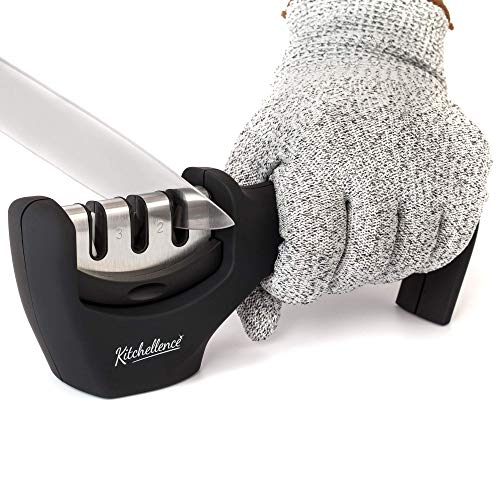
4-in-1 Kitchen Knife Accessories: 3-Stage Knife Sharpener Helps Repair, Restore, Polish Blades and Cut-Resistant Glove (Black)


As an Amazon Associate we earn from qualifying purchases. Product prices and availability are accurate as of the date/time indicated.

Narcissus Knife Sharpener, Diamond Abrasives Electric Knife Sharpener for Stainless Steel and Ceramic Knives, with Scissors Sharpener & Metal Dust Collection Box, Quick Sharpening & Polishing, Silver


As an Amazon Associate we earn from qualifying purchases. Product prices and availability are accurate as of the date/time indicated.

Kimura Professional Ceramic Honing Rod, 10 inch Honing Steel, Ceramic Knife Sharpener, 1200 Grit Finish, Ergonomic & Balanced Polypropylene Handle, Ideal for All Chef Knives, Japanese Gift Box


As an Amazon Associate we earn from qualifying purchases. Product prices and availability are accurate as of the date/time indicated.

4-Rod Ceramic Sharpener Box for Kitchen Knives and Cutlery Sharpening Tool | Turn box with crock sticks, portable manual system, ceramic rods for fast and easy knife edge sharpening at home or outdoors


As an Amazon Associate we earn from qualifying purchases. Product prices and availability are accurate as of the date/time indicated.

Feekoon Wood 9.8" Ceramic Crock Knife Sharpener,2-Rod Turn Box for Kitchen | Premium 2000 grit ceramic sticks for repairing and polishing blades. Bamboo base with preset 30/40-degree sharpening angles


As an Amazon Associate we earn from qualifying purchases. Product prices and availability are accurate as of the date/time indicated.

Leriton Ceramic Honing Rod for Knives, 11 Inch Knife Sharpener, Red | Ceramic Sharpening Rod, Lightweight for Professional Home Use, Safe Ceramic Knife Sharpening, Durable Honing Tool


As an Amazon Associate we earn from qualifying purchases. Product prices and availability are accurate as of the date/time indicated.
| Product | Best for | Key spec from the title |
|---|---|---|
| Kyocera Diamond Wheel Sharpener | Owners of ceramic blades | Diamond wheel, for ceramic and steel knives |
| Narcissus Electric Knife Sharpener | Quick work on many knives and scissors | Diamond abrasives, stainless and ceramic knives, scissors slot |
| Kimura Ceramic Honing Rod, 10 Inch | Regular touch-ups of steel knives | 10 inch, 1200 grit finish, ergonomic handle |
| Leriton 11 Inch Ceramic Honing Rod | Longer blades and home use | 11 inch, lightweight, red |
| Feekoon 9.8 Inch Ceramic Crock Sharpener | Set-and-forget angle sharpening | 2-rod turn box, 2000 grit ceramic sticks, bamboo base |
| 4-Rod Ceramic Sharpener Box | Portable manual sharpening | Turn box with 4 crock sticks, ceramic rods |
| RazorSharp Knife and Scissor Sharpener | Cooks who want to pick an angle | Adjustable 14-24 degree angle guide, diamond-coated ceramic whetstones |
How to Choose
Decide what is being sharpened
Ceramic knife blades call for a diamond abrasive, since ceramic is too hard for most rods. Tools whose title says ceramic and steel knives, or lists diamond abrasives, are the ones to read closely. Steel knives that only need straightening can use a ceramic honing rod, while those with a dull or rounded edge may need a coarser abrasive stage. A mixed collection often benefits from one diamond-based tool and one rod for weekly maintenance. If a listing is vague about what it works on, such as a general four-in-one tool with multiple slots, read the product description for which slot is meant for which blade, and do not assume that every slot is safe for a ceramic edge.
Understand grit numbers
A higher grit is finer and polishes the edge, while a lower grit removes more metal. A 1200 grit rod, like the Kimura listing, is a finishing tool, and 2000 grit sticks are finer still. Coarse stages repair damage; fine stages refine. If a title lists several stages, look for which one is meant for repair, because overusing coarse stages wears blades faster than necessary.
Angle control and manual versus electric
An angle guide helps new users keep a consistent edge; the RazorSharp lists an adjustable 14 to 24 degree range. Turn boxes with fixed crock sticks hold the angle for you. Electric models save effort but remove metal quickly and take up counter space. A hand-held rod demands steadier technique. Budget sharpeners often cut corners on abrasive quality and guide stability, so favor listings that name the abrasive and give a grit.
Safety and storage
Keep a damp cloth under a rod or box so it does not slide, keep fingers behind the guard, and sharpen away from the body. Some titles mention a cut-resistant glove, which is helpful but not a replacement for care. Electric sharpeners with dust collectors reduce metal particles around the counter. Store tools out of reach of children, and check the listing for care instructions and replacement parts.
The 7 Best Options
Kyocera Advanced Ceramics Diamond Wheel Knife Sharpener
The title says it is made for ceramic and steel knives, using a diamond wheel. It is the clearest answer for the reader who owns ceramic blades.
- Strength: a diamond wheel is the abrasive type associated with ceramic blades.
- Strength: the title covers both ceramic and steel knives.
- Trade-off: the title does not list grit or angle details, so check the listing.
Skip it if you want an adjustable angle or a multi-stage system. Ceramic blades chip when dropped or twisted, so a tool that is built around the material is a safer starting point than a general-purpose slot. It suits a household with a mix of knives and a preference for a compact manual tool, and the black finish blends with most counters.
Narcissus Electric Knife Sharpener With Scissors Slot
An electric option with diamond abrasives that the title says works on stainless steel and ceramic knives. It also includes a scissors sharpener and a metal dust collector.
- Strength: diamond abrasives and ceramic knife support are listed.
- Strength: the scissors slot and dust collector add convenience.
- Trade-off: electric tools remove metal quickly and need counter space.
Skip it if you prefer slow, manual control. It is a good fit for busy households with several knives and a drawer of dull scissors, as long as users follow the instructions carefully. Because the abrasive acts quickly, short passes and frequent checking of the edge are wiser than long, heavy ones. Keep the dust collector emptied, and unplug the unit before cleaning it.
Kimura Professional Ceramic Honing Rod, 10 Inch
This is a finishing rod rather than a repair tool. The title lists a 10 inch length, a 1200 grit finish, an ergonomic handle, and a balanced polypropylene grip.
- Strength: 1200 grit is a fine finishing level for regular upkeep.
- Strength: the ergonomic handle supports a steady hold.
- Trade-off: a rod needs technique and will not repair serious damage.
Skip it if your knives are very dull or chipped. Cooks who hone before each session will like how a rod keeps edges aligned, and a 10 inch length suits most chef knives. A common routine is a few light strokes per side at a steady angle, with the tip resting on a towel on the counter, followed by a wipe of the blade. Because the finish is fine, results come from consistency of angle rather than pressure.
Leriton 11 Inch Ceramic Honing Rod
A slightly longer rod, listed as lightweight and suitable for professional or home use. The title notes a red color and a ceramic sharpening rod.
- Strength: 11 inches gives extra room for long blades.
- Strength: it is lightweight and simple to store in a drawer.
- Trade-off: the title gives no grit, so check the listing for finish level.
Skip it if you want a guided angle or an electric option. It is best for cooks already comfortable with a honing rod who need a longer working surface.
Feekoon 9.8 Inch Ceramic Crock Knife Sharpener
A turn box with two 2000 grit ceramic sticks and a bamboo base. The title says it is meant for repairing and polishing blades.
- Strength: fixed sticks hold the angle for you.
- Strength: 2000 grit gives a fine polish.
- Trade-off: a fixed angle may not match every knife.
Skip it if you need to reprofile a very dull edge. Beginners like how the sticks make a consistent angle with little effort, and the bamboo base looks tidy on a counter. Households that keep a knife block in sight tend to use a tool like this more often, because it is always ready. Wipe the sticks after use, and check the listing for the cleaning method the maker suggests for the ceramic. A little mild soap and a soft brush are the usual starting point, and the sticks should be fully dry before the box is closed and put away in a drawer.
4-Rod Ceramic Sharpener Box
This portable manual system uses four ceramic crock sticks in a turn box. It is listed for kitchen knives and cutlery.
- Strength: four rods give more stage options than a two-stick box.
- Strength: portable and manual, with no power needed.
- Trade-off: the title does not give grit levels for each rod.
Skip it if you want a documented angle range. It suits campers, caterers, and anyone who moves a knife kit between kitchens.
RazorSharp Knife and Scissor Sharpener
The adjustable 14 to 24 degree guide is the headline, paired with diamond-coated ceramic whetstones. It also covers scissors.
- Strength: the adjustable angle guide supports different knife types.
- Strength: diamond-coated stones are listed.
- Trade-off: adjustable systems need setup and patience.
Skip it if you want a one-motion sharpener. Hobbyists who want control will like it, and it pairs well with a steady table. Because the angle can be changed, thinner kitchen knives and sturdier utility blades can each get an edge that suits them, which is the main reason to take the extra setup time. Keep fingers well clear of the stones during use.
Which One Fits Your Situation
Ceramic blades that have gone dull
The Kyocera Diamond Wheel and the Narcissus electric sharpener both name ceramic knives in the title, so they are the natural shortlist.
Weekly upkeep of steel chef knives
The Kimura 10 Inch or Leriton 11 Inch rod keeps an edge aligned between sharpenings.
Beginner who wants repeatable angles
The Feekoon turn box holds the angle, while the RazorSharp lets you learn different angles later.
Mobile cook with a knife roll
The 4-Rod Ceramic Sharpener Box packs into a bag without needing a cord.
Common Mistakes
- Using a regular rod on a ceramic blade and expecting results.
- Skipping the fine stage and leaving a rough edge.
- Pressing too hard, which removes more metal than needed.
- Sharpening without a stable base, so the tool slips.
- Ignoring the edge angle the knife maker specifies, since Western and Japanese style blades are often ground differently.
Related guides
- How To Use A Meat Thermometer Correctly Probe Placement And Temps
- How To Remove Odors And Stains From Silicone Kitchen Utensils
- Dishwasher Safe Egg Spatula For Nonstick Pans
Frequently Asked Questions
Can ceramic knives be sharpened at home?
Some can with a diamond abrasive made for ceramic, but the blades are brittle. Check the knife maker’s guidance, or use a service for chipped edges.
Is a ceramic rod the same as a sharpener?
A fine ceramic rod mostly hones, which aligns the edge, and does little to restore a very dull blade. Think of it as maintenance between true sharpenings, much like straightening a bent wire rather than grinding it back to a point, and pair it with a coarser stage when a knife has lost its bite.
What grit should a beginner start with?
A medium stage repairs and a fine stage polishes. Use the finer one for upkeep and the coarser only when needed. Most home cooks spend the majority of their time on the finer stage, because regular light maintenance keeps a knife sharp with far less metal removed than occasional heavy repairs.
Are electric sharpeners safe for good knives?
They remove metal quickly, so use them sparingly and follow the instructions, especially with expensive blades.
Top picks from this guide
KITCHELLENCE4-in-1 Kitchen Knife Accessories: 3-Stage Knife Sharpener Helps Repair, Restore,…Uiozr4-Rod Ceramic Sharpener Box for Kitchen Knives and Cutlery Sharpening…FeekoonFeekoon Wood 9.8" Ceramic Crock Knife Sharpener,2-Rod Turn Box for…KimuraKimura Professional Ceramic Honing Rod, 10 inch Honing Steel, Ceramic…





Write Your Review
No reviews yet. Be the first to share your experience!