
Our Short List of 3

- Best for: A wide raised step for lifted trucks where the climb into a raised cab must feel natural.
- 6-inch wide step surface
- Raised step design for lifted trucks
- Mounting brackets included
- Textured non-slip step pads

- Best for: A full-length step with a wide surface where every door on a crew cab needs the same solid footing.
- 6-inch wide step surface
- Aircraft-grade aluminum construction
- Black powder-coated finish
- Mounting brackets included

- Best for: A drop step for a lower climb where a tall lift makes the factory step too high to reach.
- Drop-step design
- Textured step pads
- Heavy-duty construction
- Mounting brackets included
All 4 Picks at a Glance
| Product | Specs | Action |
|---|---|---|
| Tyger 6″ Riser Running Boards |
| Check price on Amazon |
| APS iBoard Explorer Running Boards |
| Check price on Amazon |
| Tyger Star Armor Running Boards |
| Check price on Amazon |
 Tyger LanderX Running Boards |
| Check price on Amazon |
A lifted truck sits higher than the step a factory board was built for, so climbing in becomes a stretch for the driver and a climb for passengers. The real decision is which running board closes that gap: a wide raised step that brings the foot up, a drop step that hangs lower than the frame, or a long board that runs the full cab. A board that is too narrow or too high leaves the same climb as before, while a board that hangs too low catches on rocks and ruts.
This guide is for owners of lifted trucks who want a safe step in and out, for drivers who carry passengers, kids, or older family members, and for anyone whose truck has a suspension lift that changed the step height. The four boards below were chosen from the names and specifications on their Amazon product pages, with step width, drop height, material, and the mounting brackets as the starting point for every comparison.
Quick Picks
As an Amazon Associate we earn from qualifying purchases
| Product | Best for | Key spec from title |
|---|---|---|
| Tyger 6″ Riser Running Boards | A wide raised step for lifted trucks | 6-inch wide raised step design |
| APS iBoard Explorer Running Boards | A full-length step with a wide surface | 6-inch wide aircraft-grade aluminum |
| Tyger Star Armor Running Boards | A drop step for a lower climb | Drop-step design with textured pads |
| Tyger LanderX Running Boards | A wide step for daily use | Wide step surface with textured pads |
How to Choose
Measure the step height after the lift
The lift changes everything about the step, because a truck that sat at one height now sits several inches higher. Measure from the ground to the door sill with the truck on flat ground, then compare that figure with the drop the board offers. A board that hangs a few inches below the sill closes the gap for most adults, while a board that sits level with the sill leaves the same climb as before. Measure twice, once with the truck empty and once loaded, because the suspension settles under weight. The step height after the lift is the number that matters.
Pick the step width for the foot
Step width decides whether the foot lands flat or hangs off the edge, and a six-inch step gives a boot a full landing while a narrower step forces the foot sideways. A wide step also gives passengers a stable surface in rain and mud, when a narrow step turns slippery. Check the width on the listing, stand on a tape measure to see what six inches feels like, and remember that a wide step is worth more than a pretty one. A foot that lands flat is a foot that does not slip.
Check the drop and the clearance together
The drop decides how easy the step is, and the clearance decides whether the board survives the trail. A deep drop step makes climbing easy but hangs low enough to catch on rocks, ruts, and high curbs, while a shallow board keeps clearance but leaves a bigger climb. Think about where the truck actually goes: a truck that stays on pavement can take a deep drop, while a truck that sees trails needs clearance. Check the drop on the listing, look at the lowest point under the truck, and pick the balance that fits the driving.
Look at the material and the finish
The material decides how the board handles weather, weight, and rust, and the finish decides whether it stays grippy when wet. Aluminum resists rust and stays light, steel is strong but needs a good coating, and a textured powder-coated finish keeps the step grippy in rain and mud. Check the material on the listing, look for a finish that is described as textured or non-slip, and remember that a smooth board turns into a slide in the rain. The finish is a safety feature, not a styling choice.
The 4 Best Options
Tyger 6″ Riser Running Boards
- Best for: A wide raised step for lifted trucks where the climb into a raised cab must feel natural.
- 6-inch wide step surface
- Raised step design for lifted trucks
- Mounting brackets included
- Textured non-slip step pads
A wide raised step for lifted trucks where the climb into a raised cab must feel natural.
The raised step sits higher than a drop step, so very short passengers may still need a hand. Check the step height against the tallest and shortest users before ordering.
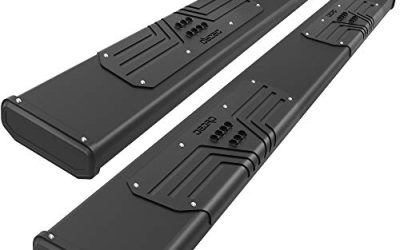
The Tyger 6″ Riser Running Boards fit the lifted truck owner who wants a wide raised step that closes the gap left by the lift. Their six-inch width gives a boot a full landing, and the raised step design lifts the foot higher than a flat board, which makes climbing into a raised cab feel natural rather than a stretch. The mounting brackets are built for a direct fit, so the boards sit level and stable under weight. They suit a daily driver with a suspension lift where the step must work for the driver, passengers, and kids alike.
Watch out for: The raised step sits higher than a drop step, so very short passengers may still need a hand. Check the step height against the tallest and shortest users before ordering.
APS iBoard Explorer Running Boards
- Best for: A full-length step with a wide surface where every door on a crew cab needs the same solid footing.
- 6-inch wide step surface
- Aircraft-grade aluminum construction
- Black powder-coated finish
- Mounting brackets included
A full-length step with a wide surface where every door on a crew cab needs the same solid footing.
The aluminum boards are light, which is good for weight but means they flex slightly under a heavy load. Check the load rating against the heaviest user before ordering.
The APS iBoard Explorer Running Boards fit the lifted truck owner who wants a full-length step with a wide, stable surface. Their six-inch width runs the full cab, so the driver and the rear passengers each get the same solid step, and the aircraft-grade aluminum keeps the boards light while resisting rust. The black powder-coated finish stays grippy in rain and mud, and the mounting brackets are built for a direct fit. They suit a crew cab with a lift where every door needs a step that works in all weather.
Watch out for: The aluminum boards are light, which is good for weight but means they flex slightly under a heavy load. Check the load rating against the heaviest user before ordering.
Tyger Star Armor Running Boards
- Best for: A drop step for a lower climb where a tall lift makes the factory step too high to reach.
- Drop-step design
- Textured step pads
- Heavy-duty construction
- Mounting brackets included
A drop step for a lower climb where a tall lift makes the factory step too high to reach.
The drop step hangs lower than the frame, so it can catch on rocks, ruts, and high curbs. Check the ground clearance before taking the truck off pavement.
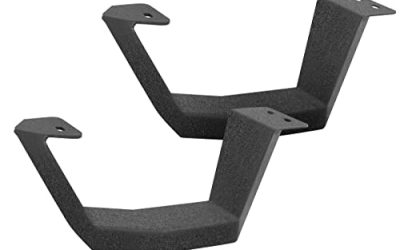
The Tyger Star Armor Running Boards fit the lifted truck owner who wants a drop step that hangs lower than the frame for the easiest climb. Their drop-step design puts the foot closer to the ground, which makes a big lift feel small, and the textured step pads keep the footing sure in rain and mud. The heavy-duty construction handles daily use and rough weather, and the mounting brackets hold the boards steady under weight. They suit a tall lift where the climb is the problem and the truck stays mostly on pavement.
Watch out for: The drop step hangs lower than the frame, so it can catch on rocks, ruts, and high curbs. Check the ground clearance before taking the truck off pavement.
Tyger LanderX Running Boards
- Best for: A wide step for daily use where a simple, rust-resistant board must work in every weather.
- Wide step surface
- Aluminum construction
- Textured non-slip pads
- Mounting brackets included
A wide step for daily use where a simple, rust-resistant board must work in every weather.
The step is a flat board rather than a drop step, so a very tall lift may still leave a big climb. Check the step height against the lift before ordering.
The Tyger LanderX Running Boards fit the lifted truck owner who wants a wide step for daily use without a complicated design. Their wide step surface gives a boot a full landing, and the textured non-slip pads keep the footing sure in wet weather. The aluminum construction resists rust and keeps the weight down, and the mounting brackets are built for a direct fit that holds the boards level. They suit a daily driver with a moderate lift where the step must work every day, in every weather, without fuss.
Watch out for: The step is a flat board rather than a drop step, so a very tall lift may still leave a big climb. Check the step height against the lift before ordering.
Which One Fits Your Situation
A tall lift with a hard climb
Pick the Tyger Star Armor Running Boards when the lift is tall and the climb is the main problem. Their drop-step design puts the foot closer to the ground, which makes a big lift feel small. The Tyger 6″ Riser Running Boards are the alternative when the buyer wants a wide raised step instead of a drop step.
A crew cab with passengers at every door
Pick the APS iBoard Explorer Running Boards when the truck is a crew cab and every door needs the same solid step. Their six-inch width runs the full cab, and the aluminum construction resists rust in all weather. The Tyger LanderX Running Boards are the alternative when the buyer wants a simpler wide step for daily use.
A daily driver with a moderate lift
Pick the Tyger LanderX Running Boards when the truck is a daily driver with a moderate lift. Their wide step and textured pads work in every weather, and the aluminum construction keeps rust away. The Tyger 6″ Riser Running Boards are the alternative when the buyer wants a raised step that closes more of the gap.
A truck that sees trails and pavement
Pick the Tyger 6″ Riser Running Boards when the truck splits its time between trails and pavement. Their raised step keeps clearance under the truck while still closing the gap. The Tyger Star Armor Running Boards are the alternative only when the truck stays on pavement, because their drop step hangs low.
Common Mistakes
- Buying boards for the factory height, then finding the lift made them useless
- Ignoring the step width, then finding a boot hangs off the edge in the rain
- Picking a deep drop step for a truck that sees trails, then catching it on rocks
- Forgetting to check the fitment, then finding the brackets do not match the cab
- Choosing a smooth finish, then finding the step turns slippery in wet weather
Frequently Asked Questions
What size running boards do I need for a lifted truck?
Measure from the ground to the door sill after the lift, then pick a board whose drop closes most of that gap. A six-inch wide step suits most boots, and a drop step suits a tall lift. Check the fitment list for the cab and bed, since a crew cab board will not fit a regular cab.
Do running boards reduce ground clearance?
Yes, because any board hangs below the frame, and a drop step hangs lower than a flat board. A raised step keeps more clearance than a drop step, which matters on trails. Check the lowest point under the truck and compare it with the board, then decide whether the step is worth the clearance it costs.
Are running boards hard to install?
Most boards in this guide use mounting brackets built for a direct fit, so installation takes basic hand tools and an afternoon. The brackets bolt to existing points on the frame, and no drilling is usually needed. Check the listing for the tools required, and have a second person hold the board level while the brackets are tightened.
Steel or aluminum running boards for a lifted truck?
Aluminum resists rust and stays light, which suits a daily driver in wet weather. Steel is stronger and suits a truck that sees rough use, but it needs a good coating to resist rust. Check the material and the finish on the listing, and pick the one that matches the weather and the work the truck does.


Write Your Review
No reviews yet. Be the first to share your experience!