
Our Short List of 3
All 3 Picks at a Glance
| Product | Specs | Action |
|---|---|---|
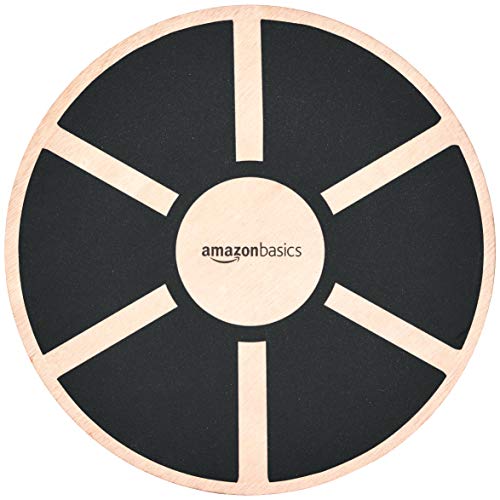 Amazon Basics Wood Wobble Balance Trainer Board (B07DWKNXNY) | Check price on Amazon | |
 Balance Board for Adults with Adjustable Stoppers (B0DNX7Z85Y) | Check price on Amazon | |
 MERACH Balance Board for Adults (B0F9FHWX7H) | Check price on Amazon |
The best balance boards turn a few quiet minutes a day into stronger ankles, a steadier core, and better coordination. A balance board is a simple platform that moves under your feet, so your body has to keep adjusting to stay level. That constant adjustment trains the small stabilising muscles around your ankles, knees, hips, and trunk that do not get much work from walking on flat ground or sitting at a desk.
If you are looking for the best balance boards for home use, the short answer is to start with a round wooden wobble board for general balance training, choose a rocker board for a gentler one-direction motion, and choose a roller board with adjustable stoppers for a harder challenge for board sports. Desk users should look for a low-tilt board that stays quiet and steady enough to use while standing and working. People coming back from an ankle injury should look for a board with a modest tilt angle, a non-slip surface, and a weight capacity well above their own body weight, and should check with a clinician before starting.
This guide explains the main types, the features that matter, and three solid picks that cover beginners, progressive training, and full-body workouts. Every pick below is a balance board, nothing else, and every pick is listed on Amazon US.
Quick Picks
| Product | Best For | Key Spec |
|---|---|---|
| Amazon Basics Wood Wobble Balance Trainer Board (B07DWKNXNY) | Beginners and general balance training | Round wood board, 15.75 x 15.75 x 3.15 inches, 265 lb capacity |
| Balance Board for Adults with Adjustable Stoppers (B0DNX7Z85Y) | Progressive training and board sports | 3-mode wobble board with roller, adjustable stoppers, non-slip surface |
| MERACH Balance Board for Adults (B0F9FHWX7H) | Full-body workouts with guided feedback | Wobble board with resistance bands, LCD monitor, 300 lb capacity |
How to Choose
Board Type: Wobble, Rocker, or Roller
Board type decides how the board moves, and that decides how hard it feels. A wobble board has a dome or ball under a round deck, so it can tip in every direction. That makes it the most versatile choice for general balance, ankle strength, and core work. A rocker board curves along one axis only, so it tips forward and back or side to side, but not both at once. That single-direction motion is easier to learn and often a better fit for standing-desk use. A roller board sits on a separate cylinder or ball, so the deck can roll and slide as well as tilt. Roller boards are the hardest of the three and the closest to the feeling of a surfboard, skateboard, or snowboard. If you are unsure where to start, a wobble board is the safest middle ground.
Tilt Angle and Difficulty
Tilt angle is the second factor that controls difficulty. A board with a low tilt angle, around eight to ten degrees, moves only a little before it reaches its limit. It feels calm and works well under a standing desk. A board with a tilt angle around fifteen to twenty degrees tips much further, so your ankles have to work harder and react faster. That is useful for rehabilitation and athletic training, but it can feel unsteady at first. Some boards let you change the difficulty by moving stoppers or adding a ball or roller. Adjustable difficulty is worth having if more than one person will use the board, or if you expect to progress quickly.
Deck Size and Foot Placement
Deck size affects how much room your feet have and how stable the board feels. A round deck around fifteen to sixteen inches across suits most adults for wobble training. It is compact enough to store beside a desk and wide enough for a shoulder-width stance. A longer rectangular deck, often seventeen inches or more, gives more room for a surf stance or a wider squat stance, and it suits taller users. A very small deck can feel cramped, especially with larger shoes, while a very large deck can feel heavy to carry. Check the deck dimensions against your shoe size and floor space before you choose. If you plan to use it in trainers, a full non-slip surface matters more, because trainers can slide on bare wood when the board tips.
Weight Capacity and Build Quality
Weight capacity is a safety figure. Choose a board rated well above your body weight, so it is never working near its limit. A capacity of 265 lb suits many adults, while 300 lb or more gives extra headroom for dynamic moves such as squats, lunges, and single-leg stands. Solid wood decks tend to feel sturdy and last well, while heavy-duty plastic decks are lighter and easier to carry. Look at how the base is attached and whether the non-slip surface is bonded firmly to the deck. A well-made board should feel solid underfoot even when it is tipping.
Surface Grip and Safety Features
Grip is what keeps your feet on the board when it moves. Most balance boards use a non-slip coating, grip tape, rubber pads, or a textured mesh surface. Full coverage is better than a few small patches, especially if you sweat during a workout or use the board in socks. Roller boards often include adjustable stoppers that limit how far the deck can roll, which keeps the board from shooting out from under you. Always use a balance board on a flat, dry, clear floor, with enough space around you to step off safely. Hold a wall, chair, or rail when you first step on.
Intended Use: Fitness, Rehab, Desk, or Board Sports
Your intended use should narrow the field quickly. For general fitness and core strength, a round wobble board is usually enough. It supports squats, planks with hands on the deck, single-leg stands, and simple balance drills. For rehabilitation and ankle strengthening, a wobble board with a moderate tilt and a secure grip surface is the usual choice, and a clinician can advise on the right tilt and exercises. For standing-desk use, a low-tilt rocker or wobble board works best, because it adds gentle movement without distracting you from work. For surf, skate, and snowboard training, a roller board with adjustable stoppers and a longer deck is the closer match. For children, look for a board sized and rated for their weight, with a low tilt and a strong grip surface, and supervise use.
Storage, Portability, and Extras
Balance boards are simple tools, so extras should support the training, not distract from it. A lightweight board is easier to carry from room to room, while a heavier wood board tends to stay put and feel more planted. Some boards include resistance bands, which add upper-body work and can help you stay balanced while you learn. Some include an LCD monitor that counts time or movement, which can help you track a short daily session. Those extras are useful only if you will actually use them. A round wobble board can lean against a wall or slide under a bed. A longer roller board needs more wall space, and its roller needs a safe place where it will not roll away. A board that is easy to reach gets used far more often.
The Best Balance Boards Reviewed
Amazon Basics Wood Wobble Balance Trainer Board (B07DWKNXNY)
The Amazon Basics Wood Wobble Balance Trainer Board is the straightforward starting point in this guide, and for many people it is the only board they will need. It is a round solid wood board with a non-slip surface, a dome base underneath, and a compact footprint that fits easily beside a desk or in a living room. Its dimensions are 15.75 x 15.75 x 3.15 inches, and its stated weight capacity is 265 lb. That is large enough for a comfortable stance and strong enough for most adults doing balance drills, squats, and core work.
Who it suits: beginners who want a first balance board, people adding short balance sessions to a home workout, and anyone who wants a simple wobble board without adjustable parts. It also suits standing-desk users who want gentle movement. Its round shape tips in every direction, so it trains ankles and core from many angles, and its wood deck feels solid underfoot.
Who should skip it: athletes who already find a basic wobble board easy and want a roller board for board-sport training, and taller or heavier users who want a higher weight capacity or a longer deck. If you want adjustable difficulty, this board does not provide it, so you may outgrow it faster than an adjustable model. Start by holding a wall or sturdy chair, stepping on with both feet, and finding the level position before letting go. Short sessions of a few minutes, repeated often, build balance faster than one long session.
Balance Board for Adults with Adjustable Stoppers (B0DNX7Z85Y)
This 3-mode balance board is the progressive pick in this guide. It is a wobble board with a roller, adjustable stoppers, and a non-slip surface, designed to change difficulty as your balance improves. In its simplest mode it works as a wobble board. Add the roller and it becomes a roller board, with the deck able to slide and tilt. Move the stoppers and you change how far the deck can travel, so you can start with a short, controlled range and widen it as your control improves.
Who it suits: people who have already used a basic wobble board and want a harder challenge, surfers, skaters, and snowboarders who want to practise board control at home, and households where more than one person will use the same board at different levels. The adjustable stoppers make it a shared board that can be set easy for one person and hard for another in moments.
Who should skip it: complete beginners who have never stood on a balance board, and people looking for a quiet desk board. A roller board is harder to learn, needs more floor space, and demands more attention than a round wobble board. It is also not the best first choice for rehabilitation unless a clinician advises it. Learn the wobble mode first, then add the roller with the stoppers close together, then widen them a little at a time. Step off calmly when you lose balance, reset, and start again.
MERACH Balance Board for Adults (B0F9FHWX7H)
The MERACH Balance Board for Adults is the full-body pick in this guide. It is a wobble board with resistance bands and an LCD monitor, built for people who want balance training to feel like a workout rather than a single drill. Its stated weight capacity is 300 lb, which gives extra headroom for dynamic moves. The resistance bands add upper-body work, so you can combine balance, core, and arm training in one session. The LCD monitor gives feedback during a session, which helps you keep track of time and effort.
Who it suits: home-gym users who want one compact tool for balance, core, and light resistance work, people who like guided feedback and a clear session length, and anyone who finds a plain wobble board a little dull. The bands can also help beginners, because holding a band gives a little extra stability while you learn.
Who should skip it: people who want the simplest possible board, and people who want a roller board for board-sport training. This is a wobble board with extras, not a roller board, so it will not reproduce the sliding motion of a surf or skateboard. Check that the bands are attached securely before each session, and replace them if they show wear or fraying. Start without the bands until you can stand comfortably, then add one band at a time, keeping movements slow and controlled.
What to Check Before You Buy
Before you buy any balance board, check five things. First, check the board type and tilt against your goal. A desk board should be low and gentle. A rehab board should be moderate and secure. A board-sport board should be a roller with stoppers. Second, check the deck size and weight capacity against your body and your shoes. The board should be rated well above your weight, and the deck should be wide enough for a comfortable stance. Third, check the grip surface. Look for full non-slip coverage, not just a few patches. Fourth, check the floor where you will use it. Balance boards need a flat, dry, hard floor with clear space around them. Carpet can make a board feel uneven, and a cluttered room makes stepping off risky. Fifth, check the parts that come with it. A roller, ball, bands, or stoppers should be included and easy to fit, with no loose or rattling parts.
Also think about who else will use the board. A household board needs a capacity and a difficulty range that suit the heaviest and the least experienced user, not just the person buying it. An adjustable board is often the better shared choice. Think about noise too, especially if you live in a flat. A thin exercise mat underneath can reduce noise and protect the floor. Finally, set realistic expectations. Balance improves gradually, and most people notice better steadiness within a few weeks of short, regular sessions. If you have a medical condition, a recent injury, or a history of falls, check with a clinician before starting, and stop if you feel pain, dizziness, or sharp discomfort.
FAQ
Are balance boards good for beginners?
Yes, provided you choose the right type and start carefully. A round wobble board with a moderate tilt is usually the best first board, because it is versatile without being as demanding as a roller board. Start by holding a wall or sturdy chair, step on with both feet, and practise finding the level position. Keep sessions short, keep your knees soft, and step off when your ankles tire. As your control improves, try single-leg stands, slow squats, and gentle weight shifts.
How long should I use a balance board each day?
A short daily session is usually enough to start. Many people begin with three to five minutes, once or twice a day, and build up as their ankles and core get stronger. Longer sessions are fine once you are comfortable, but fatigue can make your form worse, so stop when your ankles feel tired or your balance starts to slip. Consistency matters more than length. A few minutes every day will do more than a single long session once a week.
Can I use a balance board at a standing desk?
Yes, but the board needs to suit desk work. Look for a low-tilt rocker or wobble board that moves gently and stays quiet, so you can keep typing while you stand on it. A high-tilt board or a roller board is usually too demanding for desk use, because it needs too much attention. Start with short periods at the desk, such as ten to fifteen minutes, and step off when you need to focus or when your legs tire.
Are balance boards helpful after an ankle injury?
Balance boards are often used in ankle rehabilitation, because they train the small muscles and the sense of position that support the ankle. A wobble board with a moderate tilt and a secure grip surface is the usual choice. The right board and exercises depend on your injury, your stage of recovery, and your clinician’s advice. Do not start balance training after an injury without checking with a clinician first. Stop if you feel pain, swelling, or sharp discomfort.
What is the difference between a wobble board and a rocker board?
A wobble board tips in every direction, because it sits on a dome or ball under a round deck. That makes it more challenging and more versatile. A rocker board tips in one direction only, because its base curves along a single axis. That makes it easier to learn and suits desk use and gentle training. A roller board is a third type, where the deck sits on a separate cylinder or ball and can slide as well as tilt. Roller boards are the hardest and the closest to board sports. For general training, start with a wobble board. For gentle movement, start with a rocker board. For board-sport training, look at a roller board with adjustable stoppers.
Bottom Line
The best balance boards are the ones that match your goal, your ability, and the place you will use them. For most people, the Amazon Basics Wood Wobble Balance Trainer Board is the sensible first choice: simple, solid, compact, and easy to learn. If you want a board that grows with you, the 3-mode board with adjustable stoppers gives you wobble and roller training in one tool. If you want balance training to feel like a full workout, the MERACH Balance Board adds resistance bands, an LCD monitor, and a higher weight capacity to the same basic wobble motion. Choose the board that fits your goal, start with short sessions and support nearby.
Disclosure: As an Amazon Associate, we may earn from qualifying purchases.
Write Your Review
No reviews yet. Be the first to share your experience!