
Stock control depends on knowing what is actually on the shelf, not what the system thinks is on the shelf. A pallet weighing scale gives a fast, independent check. Weigh a pallet, compare the reading with the expected weight for that stock, and a difference points to a short delivery, a picking error, or a record that needs correcting. Without that check, errors sit in the stock record until a full count finds them, often weeks later.


This guide covers pallet weighing scales for stock control. It explains how to use weight as a stock check, how to choose between fixed and mobile scales, and how printed tickets and records help a stock team keep counts accurate between full stocktakes.
How to Choose a Pallet Weighing Scale for Stock Control
Use weight as a stock check, not just a shipping check
A pallet scale for stock control is used at receiving, at put-away, and during cycle counts. At receiving, the weight checks the delivery against the purchase order. At put-away, it checks that the pallet moved to storage is the pallet that was received. During a cycle count, it checks a sample of pallets without counting every carton. For that to work, the scale needs to be easy to use at each of those points, not only at the dock door.
Choose capacity with headroom
Capacity should cover your heaviest pallet plus the pallet itself, with headroom left over. A 5,000 lb capacity covers most general stock pallets. Dense stock, consolidated pallets, and pallets with liquid or metal goods can need 10,000 lb capacity. A scale used near its limit gives readings that drift, so choose a capacity that keeps normal loads in the middle of the range.
Decide between a fixed floor scale and a pallet jack scale
A fixed floor scale suits a stock control station where pallets are checked at the same point, such as receiving or the end of a pick line. The operator drives the pallet onto the deck, reads the weight, and moves on. A pallet jack scale suits stock control in the aisles, because it weighs the pallet where it is stored. It is slower per pallet than a fixed scale, but it removes the trip to a fixed station. Many stock teams use one fixed scale at receiving and a pallet jack scale for cycle counts in the aisles.
Put a record with the weight
A weight reading that is not recorded does not help stock control. A built in printer gives a ticket that can be attached to the pallet or filed with the delivery paperwork. A scale with a computer connection can send the weight into a stock system. If the team records weights by hand, a clear display and a simple workflow matter more than connectivity, but the record still needs to be kept, with the date, the pallet, and the expected weight alongside the reading.
Match platform size to the pallets you stock
A 48 inch by 48 inch platform covers standard pallets. A 60 inch by 60 inch platform covers large pallets, double pallets, and oversized stock that smaller platforms cannot hold. Measure the largest pallet you stock, including any overhang from cartons, and choose a deck that covers it fully. A deck that is too small gives unstable readings and risks damage to the load.
Top Picks
SellEton SL-4×4-5k-NN-TP Industrial Pallet Size Floor Scale with Printer
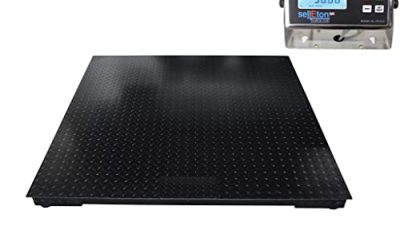
The SellEton SL-4×4-5k-NN-TP Industrial Pallet Size Floor Scale with Printer provides a 48 inch by 48 inch platform, a 5,000 lb capacity with 1 lb readability, and a built in printer, which makes it a natural fit for stock control at receiving. The printer lets the team weigh a pallet and print a ticket on the spot, then attach the ticket to the pallet or file it with the delivery paperwork. The listing describes the scale as suited to shipping, warehousing, and logistics, with a heavy duty design for pallet sized loads.
- 5,000 lb capacity with 1 lb readability
- 48 inch by 48 inch platform for standard pallets
- Built in printer for weight tickets at receiving
- Heavy duty industrial floor scale design
Best for: Stock teams that need a printed weight ticket for every pallet checked at receiving.
SellEton SL-5000-PJP Pallet Jack Scale with Built-in Printer
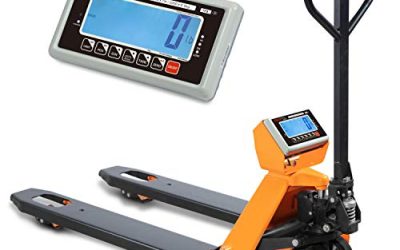
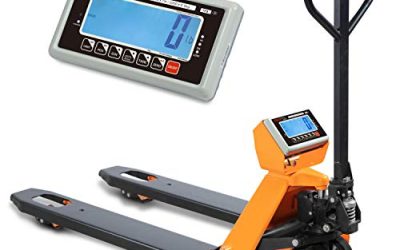
The SellEton SL-5000-PJP Pallet Jack Scale with Built-in Printer combines a pallet jack, a scale, and a printer in one tool. It handles up to 5,000 lb in 1 lb increments, and it is suited to standard US pallets. For stock control, that means the operator can lift a pallet in the aisle, weigh it, print a ticket, and move it to storage in one trip, without bringing the pallet to a fixed scale first. The built in printer provides a record at the point of checking, which is useful during cycle counts.
- 5,000 lb capacity in 1 lb increments
- Pallet jack design for standard US pallets
- Built in printer for a weight ticket on the spot
- Four alloy steel shear beam load cells described in the listing
Best for: Stock teams that want to weigh and document a pallet in the aisle, during cycle counts or put-away.
PEC Tools FS Series Professional Grade Steel Floor Scale 10000x1lb 48×48
The PEC Tools FS Series Professional Grade Steel Floor Scale provides a 10,000 lb capacity with 1 lb readability on a 48 inch by 48 inch steel platform. Its four NTEP certified alloy load cells and diamond tread plates suit a stock area where heavy, dense pallets arrive daily. The large deck holds a full pallet, the LCD indicator is easy to read, and the heavy duty construction stands up to forklift and pallet jack traffic at the dock door.
- 10,000 lb capacity with 1 lb readability
- 48 inch by 48 inch steel platform with diamond tread plates
- Four NTEP certified alloy load cells
- LCD indicator for clear weight readings
Best for: Stock teams with dense, heavy pallets that need extra capacity and a durable steel deck.
SellEton SL-700-5×5 Industrial Floor Scale, 2,500 lb

The SellEton SL-700-5×5 is the largest scale in this guide, with a 60 by 60 inch platform and a 2,500 lb capacity. Its oversized deck takes large pallets, double pallets, and bulky stock that smaller platforms cannot hold, and its four alloy steel load cells keep readings accurate across the full range. The metal indicator, dust and splash protection, and overload protection suit a busy stock area where the scale works all day.
- 60 by 60 inch platform for large pallets and oversized stock
- 2,500 lb capacity with 0.5 lb readability
- Four alloy steel load cells for accuracy across the full range
- Metal indicator with easy-to-read display
- Protected against dust and splash water
- Overload protection for busy stock areas
Best for: Stock teams that hold large pallets and oversized stock that need a bigger deck.
Comparison
| Product | Key Feature | Best For |
|---|---|---|
| SellEton SL-4×4-5k-NN-TP Floor Scale with Printer | 5,000 lb capacity, built in printer, 48 by 48 inch platform | Printed tickets for pallets checked at receiving |
| SellEton SL-5000-PJP Pallet Jack Scale with Printer | Mobile weighing with built in printer, 5,000 lb capacity | Weighing in the aisle during cycle counts |
| PEC Tools FS Series Floor Scale 10000x1lb 48×48 | 10,000 lb capacity, steel deck | Dense and heavy stock pallets |
| SellEton SL-700-5×5, 2,500 lb | 60 by 60 inch platform with 2,500 lb capacity | Large pallets and oversized stock |
Buying Guide for Stock Control
Weigh at receiving, at put-away, and during cycle counts
Stock control works best when weighing happens at three points. At receiving, weigh the pallet and compare it with the purchase order. At put-away, weigh it again if the pallet was split or repacked. During a cycle count, weigh a sample of pallets instead of counting every carton. A scale that is easy to use at all three points will be used. A scale that is only easy at the dock will only be used at the dock.
Compare the weight with the paperwork every time
Keep the purchase order and packing list at the stock control station. Weigh the pallet, compare the reading with the expected weight, and note any difference. A small difference may be packaging or a different pallet, but a large difference should trigger a count and a check for damage before the pallet is put away. Record the date, supplier, purchase order number, and weight, and keep the ticket with the pallet until any shortage is resolved.
Use cycle counts to catch errors early
A full stocktake finds errors, but it finds them late. A cycle count, where a small sample of pallets is checked every week, finds errors early, while they are still easy to fix. A pallet scale makes cycle counts faster, because weighing a pallet takes less time than counting every carton on it. Choose a sample that covers fast-moving stock, high-value stock, and stock that has shown errors before.
Keep the record with the pallet
A weight ticket should travel with the pallet or go into the stock file for that pallet. If the ticket is lost, the check is lost. If the team uses a computer system, the weight should be entered at the time of weighing, not at the end of the shift from memory. A printer at the scale, or a scale with a computer connection, makes that record keeping easier.
Frequently Asked Questions
What size pallet scale do I need for stock control?
A 48 inch by 48 inch platform covers standard pallets. Large pallets and oversized stock need a 60 inch by 60 inch platform. Measure your largest pallet, including carton overhang, and choose a deck that holds it fully.
What capacity is enough for stock pallets?
A 5,000 lb capacity covers most general stock pallets. Dense, consolidated, or liquid loads can need 10,000 lb capacity. Choose a capacity that keeps your heaviest normal pallet in the middle of the range, not at the limit.
Is a pallet jack scale or a floor scale better for stock control?
A fixed floor scale is faster when pallets are checked at the same point, such as receiving. A pallet jack scale is better for cycle counts in the aisles, because it weighs where the pallet is stored. Many teams use a fixed scale at receiving and a pallet jack scale for cycle counts.
Do I need a printer on a stock control scale?
A printer helps when every pallet needs a weight ticket for the stock file. If the weight is entered into a computer system at the checking station, a printer is less important. Choose the printer option when the ticket travels with the pallet or goes into a paper file.
Conclusion
Stock control needs a pallet scale that checks pallets at receiving, at put-away, and during cycle counts, with a record that can be found later. The SellEton SL-4×4-5k-NN-TP floor scale with printer suits a fixed receiving station that needs a ticket for every pallet. The SellEton SL-5000-PJP pallet jack scale suits teams that weigh in the aisle and need a ticket on the spot. The PEC Tools FS Series 10,000 lb scale suits dense and heavy stock pallets. The SellEton SL-700-5×5 suits large pallets and oversized stock. Weigh at each checkpoint, compare every weight with the paperwork, and keep a clear record, and stock control becomes a routine that catches errors early instead of a full count that finds them late.
Disclosure: As an Amazon Associate, we earn from qualifying purchases.




Write Your Review
No reviews yet. Be the first to share your experience!