
The Short Answer
For most pan-frying, the safest kitchen tongs are 12 inches (30.5 cm) long. This length keeps your hands about a foot from hot oil, splattering fat, and the rim of a shallow skillet while still giving you enough control to turn chicken, fish, vegetables, and cutlets.
Choose 9-inch tongs (22.9 cm) for small pans, low-splatter cooking, and precise tasks such as turning bacon or sautéing vegetables. Choose 12-inch tongs for cast-iron skillets, frying pans 10 inches or wider, and foods cooked in more than a thin film of oil. Extra-long 16-inch tongs (40.6 cm) can add distance from a grill or deep pot, but they are usually less precise and more tiring for everyday stovetop cooking.
As an Amazon Associate we earn from qualifying purchases at no extra cost to you.
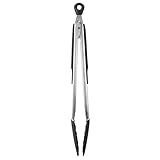


Length is only one safety factor. Look for a locking mechanism that stays closed during storage, scalloped or textured tips that grip food securely, and heat-resistant silicone or stainless steel at the working end. Tongs should open smoothly without requiring excessive hand force. For nonstick cookware, silicone tips are the safer choice because bare metal can scratch the coating.
Standard Sizes
Kitchen tongs are commonly sold in a few practical size categories. Measurements below refer to the overall length from the handle end to the tips. Actual dimensions can vary slightly by brand, especially when a product includes a hanging loop or locking ring.
| Overall length | Metric length | Best for | Pan-frying safety and control |
|---|---|---|---|
| 6 inches | 15.2 cm | Serving, garnishing, small toaster ovens | Too short for hot oil; high hand exposure |
| 9 inches | 22.9 cm | Small skillets, eggs, vegetables, bacon | Good control; suitable for low-splatter cooking |
| 10 inches | 25.4 cm | Everyday sautéing and compact stovetops | Balanced control and moderate hand clearance |
| 12 inches | 30.5 cm | Most frying pans, cast iron, shallow frying | Best all-purpose safety and reach |
| 16 inches | 40.6 cm | Grills, stockpots, outdoor cooking | Maximum distance; reduced precision and leverage |
A 12-inch pair is the most versatile single purchase. For example, the OXO Good Grips 12-Inch Tongs with Silicone Head is listed at about $17.01 and combines a common pan-frying length with coated tips for cookware protection. A 9-inch model such as the U-Taste Kitchen Tong is listed at about $12.99 and is easier to control in a smaller skillet.
Sets can be a practical option if you cook across several pan sizes. The HOTEC set, for example, includes 9-inch and 12-inch tongs and is listed at about $8.54. The GORILLA GRIP two-pack is listed at about $9.98, although the exact lengths and tip materials should be checked on the package before buying. Across these examples, a reasonable shopping range is roughly $8 to $18 for basic household tongs, with specialty construction or premium handles costing more.
Tip width also affects performance. Narrow tips offer better precision for small foods, while wider, scalloped tips hold heavier chicken breasts or steak more securely. For pan-frying, look for a usable gripping area of approximately 1.5 to 2.5 inches (3.8 to 6.4 cm). Very narrow tips may crush delicate food; very broad tips can be awkward in a crowded pan.
How to Measure Your Space
- Measure the pan diameter. Measure across the top rim, not the cooking surface. A 10-inch skillet usually works well with 10- or 12-inch tongs. For a 12-inch skillet, 12-inch tongs provide more useful reach.
- Measure the distance to the cooking surface. If your pan sits inside a deep range grate, portable burner, or high-sided cooking station, add that height to the distance your hand must reach. A 12-inch pair may feel short if the food is far below the counter.
- Check the space around the burner. Measure the gap between the front of the pan and the counter edge. Longer tongs need room behind the handle. If the handle hits a wall, control panel, or another pan, a 9- or 10-inch pair may be safer than a longer model.
- Account for pan depth. For a shallow skillet under 2 inches deep, 9 or 10 inches is usually sufficient. For a Dutch oven or deep sauté pan 3 to 5 inches deep, 12-inch tongs provide better hand clearance.
- Consider the splash zone. If you fry in enough oil to cover part of the food, choose 12 inches or more. If you only use 1 to 2 tablespoons of oil, shorter tongs may provide better accuracy without exposing your hand to significant splatter.
- Test the grip distance. Hold a ruler or an unopened pair of tongs over the pan. Your hand should remain outside the pan’s rim and away from the most active bubbling area while the tips reach the food.
By Room or Use Case
Everyday stovetop pan-frying
Choose 12-inch tongs for the best all-around balance. They work well for turning chicken pieces, burgers, sausage, fish fillets, and vegetables in 10- to 12-inch skillets. Silicone tips are especially useful for coated cookware. A locking ring or pull tab should let you close the tongs with one hand, leaving the other hand free to adjust the burner or pan handle.
Small pans and precision cooking
Use 9-inch tongs for an 8-inch skillet, compact sauté pan, or crowded stovetop. Their shorter length gives you better fingertip control and makes it easier to turn small items without knocking into the opposite rim. They are a good choice for scrambled eggs, asparagus, mushrooms, bacon, and thin cutlets. Avoid using them for vigorous deep frying, where hot oil can reach the handle and hand.
Cast-iron skillets and heavy foods
A 12-inch pair with firm spring tension is safer for cast iron and heavier foods. Cast iron retains heat and often has a wide, thick rim, so extra reach is useful. Select tongs with a sturdy stainless-steel body and grippy tips. Extremely flexible tongs can bend when lifting a large steak or a wet piece of chicken, causing food to slip back into the oil.
Deep pans, Dutch ovens, and shallow frying
For a deep Dutch oven or sauté pan, 12-inch tongs are the minimum practical size for most cooks. If the vessel is unusually deep or oil splatter is a major concern, 14- to 16-inch tongs may be appropriate. Keep in mind that longer tools reduce leverage. They can be cumbersome when turning delicate fish, so use the longest length that still lets you control the food accurately.
Grills and outdoor burners
For a grill grate or outdoor burner, 16-inch tongs provide useful distance from flames and radiant heat. Their extra length is less important for an indoor frying pan because it can make the handle harder to maneuver. Grill tongs should have a strong hinge, locking storage feature, and tips large enough to handle food without repeated squeezing.
Common Sizing Mistakes
- Buying the longest pair automatically. Extra length does not always mean extra safety. If you cannot control the tips, food can fall, oil can splash, and your hand may tense from excessive squeezing.
- Using 6-inch serving tongs at the stove. Short tongs put your fingers close to the pan rim and hot vapor. Reserve them for serving or cold-food preparation.
- Ignoring pan depth. A 9-inch pair may be adequate for a shallow skillet but uncomfortable in a deep Dutch oven. Measure the vertical reach, not only the pan diameter.
- Choosing based on length alone. A secure grip, heat-resistant tips, and a comfortable handle matter just as much. A 12-inch tool with slippery tips is less useful than a 10-inch tool that holds food firmly.
- Overlooking storage clearance. Long tongs may not fit in a utensil drawer. Confirm the closed length and width, especially if the tongs have a bulky locking mechanism.
- Using metal tips on nonstick pans. Even careful cooking can create scratches when the tips slide under food. Choose silicone or another coating-safe material for coated cookware.
FAQ
Are 9-inch tongs long enough for pan-frying?
They are long enough for low-splatter cooking in a small or medium skillet, especially when frying with a small amount of oil. For a large pan, deep vessel, or food that releases substantial moisture into hot oil, 12-inch tongs offer a safer margin.
Are 12-inch tongs too long for everyday cooking?
No. Twelve inches is a practical everyday length for most home kitchens. They provide more hand clearance than 9-inch tongs without the awkward leverage of 16-inch grill tongs. They may feel oversized only in a very small pan or when handling tiny ingredients.
What is safer: silicone or stainless-steel tips?
Silicone tips are safer for nonstick and ceramic-coated pans because they are less likely to scratch the surface. Stainless-steel tips can be durable and heat tolerant, but they require more careful handling around coated cookware. In either case, avoid leaving tongs resting in a hot pan.
Should I buy one pair or a set?
Buy one 12-inch pair if you want a general-purpose tool for pan-frying. A 9-inch and 12-inch set is more versatile if you regularly switch between small skillets and deep or wide pans. Look for comfortable handles, a reliable lock, and tips that match your cookware before comparing price.
Ready to decide? Our #1 pick for 2026 is the 6 inches.
Live price & availability on Amazon.





Write Your Review
No reviews yet. Be the first to share your experience!