
- Top Pick: Freshware Wood Cutting Boards for Kitchen, Dishwasher Safe, Medium 12" x 9" and Large, 15" x 11.25", Set of 2, Natural
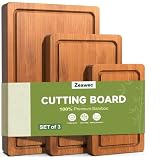
- Best Value: 3-Piece Set Deep-Carbonized Bamboo Cutting Board for Kitchen, Carbonized
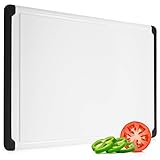
- Premium Choice: Composite Wood Fiber Cutting Board Set of 2, Dishwasher Safe, Non-Toxic
Choosing a chopping board by appearance alone is an easy mistake. Shoppers often focus on grain color, a low price, or a “dishwasher safe” label without checking the board’s actual dimensions, construction, or maintenance requirements. Others assume the hardest, densest wood is automatically best. In practice, an extremely hard surface can be less forgiving to knife edges, while a soft board may scar, warp, or wear quickly.
The best choice balances wood density, knife friendliness, stability, cleaning habits, and available counter space. For most home kitchens, a medium-density hardwood or a well-made bamboo or composite board offers the most practical combination. This guide explains what to look for in 2026, including useful size, weight, price, and thickness targets.
As an Amazon Associate we earn from qualifying purchases at no extra cost to you. Product prices and availability are accurate as of the date shown and are subject to change.



Decide These 3 Things First
- How you prep: If you regularly cut meat, large vegetables, or multiple ingredients at once, choose a board at least 16 by 12 inches. Occasional fruit, cheese, and garnish prep can work on a 12 by 9-inch board.
- How you clean: Traditional wood boards should generally be hand-washed and dried promptly. If you need dishwasher convenience, look for a dishwasher-rated composite board or a thin, sealed bamboo board—but expect a shorter life than with careful hand washing.
- How much knife feel you prefer: Medium-density woods such as maple, walnut, and cherry usually provide a good balance of durability and edge friendliness. Very hard materials can feel less pleasant for everyday chopping, while very soft woods can develop deep grooves.
Size and Work Surface
Size is often more important than a small difference in wood density. A board that is too small forces food onto the counter and makes knife work awkward. For everyday cooking, aim for a usable surface of at least 15 by 11 inches. A 16 by 12-inch board is a versatile minimum for a family kitchen, while a 20 by 15-inch board gives you room for large roasts, squash, or batch prep.
Small boards around 12 by 9 inches are useful as secondary boards for citrus, bread, snacks, or quick chopping. A two-board set can be practical: use one for produce and the other for meat or poultry. Product sets similar to a 12 by 9-inch and 15 by 11.25-inch pairing are convenient for this purpose, provided both boards are thick and stable enough for repeated use.
Check counter and sink clearance before buying. A board wider than 18 inches may be difficult to wash in a standard kitchen sink. For comfortable lifting, a large wood board commonly weighs about 4 to 10 pounds, depending on thickness and species. If you have limited grip strength, choose a board with integrated handles, finger grips, or a smaller 12- to 15-inch format.
Material and Wood Density
Density describes how much mass is packed into a given volume, usually expressed in grams per cubic centimeter. It is useful, but it is not a complete quality score. A board’s grain direction, finish, thickness, and construction can matter just as much.
For general chopping, a medium-density hardwood in roughly the 0.50 to 0.70 g/cm³ range is a sensible target. Hard maple is commonly around 0.63 g/cm³, while walnut and cherry are often closer to 0.55 to 0.60 g/cm³. These figures vary by species, moisture content, and measurement method, so treat them as general comparisons rather than exact specifications.
Lower-density woods can feel gentle under a knife but may dent and groove more easily. Higher-density woods, including some teak and acacia boards, can be durable but may feel harder on knife edges. Bamboo is not technically a wood, but many bamboo boards fall in a medium-to-high density range and are often made from laminated strips. Their performance depends heavily on adhesive quality and how the strips are oriented.
Look for a board described as knife-friendly, hardwood, or end-grain or edge-grain construction. Be cautious of vague labels such as “natural wood” when the listing does not identify the species, thickness, or finish.
Construction and Thickness
Construction determines whether a board stays flat. Edge-grain boards are made by joining long strips with the grain running mostly parallel to the surface. They are generally durable and less expensive than end-grain boards. End-grain boards expose the ends of wood fibers at the cutting surface, which can be more forgiving under a knife, but they are heavier, thicker, and usually more expensive.
For a primary board, choose at least 0.75 inch of thickness. A 1- to 1.5-inch board offers better resistance to flexing and warping, especially at sizes above 16 by 12 inches. Thin boards around 0.25 to 0.5 inch are light and easy to store, but they are more likely to slide, cup, or bend and are best used as secondary prep boards.
Look for tight, even joints with no visible gaps, raised edges, or glue squeeze-out. A juice groove 0.25 to 0.4 inch wide can help contain liquid from meat or ripe produce, but it reduces usable flat space. Reversible boards are useful because either side can become the cutting surface. Non-slip feet improve stability but make the board less versatile and can trap moisture underneath.
Comfort and Cutting Performance
A good board should remain stable without requiring excessive pressure. A practical target is a finished weight of at least 2.5 to 3 pounds for a 15- to 16-inch board. Lighter boards can work if they have rubber feet or a damp towel underneath, but they tend to move during rapid chopping.
Rounded corners and eased edges make a board more comfortable to carry. Finger slots should be deep enough to use securely without reducing too much cutting area. Handles are convenient for storage, although a large handle cutout can collect food and make the board less reversible.
Knife performance is tied to both density and finish. A smooth, sealed surface should allow the blade to enter cleanly without feeling glassy or abrasive. Avoid boards with a rough, splintering surface, deep decorative grooves, or a glossy coating that appears to sit on top of the wood. Mineral oil and food-safe board wax are common maintenance finishes; varnish, lacquer, and unknown industrial coatings are less suitable for a cutting surface.
Never treat a wood board as maintenance-free. Wash it with warm water and mild dish soap, dry both sides vertically or on edge, and oil it when the surface looks pale or dry. Do not leave it soaking in a sink.
Price Tiers
Price is a useful shortcut, but it does not guarantee density or construction quality. Budget boards generally cost about $10 to $25. In this range, expect bamboo, thinner hardwood, laminated strips, or small sets. Examples such as a two-board wood set around $21.19 or a three-piece bamboo set around $12.49 can be good for light and occasional use, but inspect thickness and joint quality carefully.
Midrange boards usually cost $25 to $60. They are more likely to offer 0.75- to 1.25-inch thickness, better edge finishing, clearer species information, and more stable construction. A composite wood-fiber two-piece set around $35.99 may appeal to cooks who want a dishwasher-rated option and consistent dimensions.
Premium boards commonly cost $60 to $150 or more. They may use thick end-grain construction, higher-quality hardwood, precision milling, and replaceable or refinishing-friendly surfaces. Pay for those features only if you cook frequently and will maintain the board. A high price cannot compensate for poor drying habits or an unsuitable size.
Warranty and Long-Term Care
Check whether the warranty covers warping, splitting, or joint failure, and note its duration. A one-year limited warranty is common for budget and midrange boards. Premium makers may offer longer coverage, but exclusions often include dishwasher damage, soaking, improper oiling, knife cuts, and normal wear.
Warranty language should identify the seller or manufacturer and explain how claims are handled. Keep the receipt and product photos, particularly for online orders. A warranty is most valuable when the manufacturer publishes care instructions that match the board’s construction.
Remember that a warranty does not make a board dishwasher-safe. Repeated heat, detergent, and rapid drying can cause wood to crack or joints to open. If dishwasher cleaning is essential, choose a product explicitly rated for it and accept that replacement every few years may be more realistic than lifetime ownership.
Delivery and Assembly
Most chopping boards arrive fully assembled, so “assembly” should not be a deciding factor. What matters is packaging and delivery condition. Boards should be wrapped against moisture and protected at the corners. On arrival, check for cracks, lifted joints, splinters, severe cupping, and an unpleasant chemical odor.
Allow a delivered wood board to reach room temperature before using it. If it arrives unusually cold or damp, leave it unpacked in a dry room for 24 hours. Do not immediately soak or oil a board that has just come from a cold delivery truck. For large boards, confirm that the package weight—often 6 to 15 pounds—can be handled safely and that the board fits your sink and storage area.
Spec Checklist
| Spec | Budget | Mid | Premium |
|---|---|---|---|
| Typical price | $10-$25 | $25-$60 | $60-$150+ |
| Useful size | 12 x 9 to 15 x 11 inches | 15 x 11 to 18 x 12 inches | 16 x 12 to 20 x 15 inches |
| Thickness | 0.25-0.75 inch | 0.75-1.25 inches | 1-2 inches |
| Construction | Thin bamboo or edge-grain wood | Thicker edge-grain or composite | End-grain or premium edge-grain hardwood |
| Typical weight | 1.5-4 pounds | 3-8 pounds | 6-15 pounds |
| Best use | Light prep or secondary board | Daily home cooking | Frequent, high-volume prep |
Red Flags
- No wood species, thickness, or construction method is listed.
- The product claims to be “solid wood” but has visible hollow sections or plastic-like coating.
- Joints have gaps, uneven height, glue residue, or rough splinters.
- A large board is less than 0.5 inch thick with no stabilizing feet.
- The listing says dishwasher-safe wood without detailed care instructions.
- Reviews repeatedly mention warping, strong odors, cracking, or difficult returns.
- Decorative painted, stained, or lacquered surfaces are not clearly identified as food-safe.
FAQ
What wood density is best for a chopping board?
A medium-density hardwood around 0.50 to 0.70 g/cm³ is a practical target for most kitchens. Maple, walnut, and cherry are common choices. The right density balances durability with a surface that is not unnecessarily harsh on knife edges.
Is harder wood better for knives?
Not always. Harder, denser wood can resist dents, but a very hard surface may feel less forgiving and can contribute to faster edge wear than a well-maintained medium-density board. Construction, grain direction, and finish also affect performance.
Are bamboo boards better than wood boards?
Bamboo boards are often affordable, lightweight, and moisture-resistant, but they are made from laminated strips and can vary widely in adhesive and finish quality. Choose one with food-safe materials, smooth joints, adequate thickness, and clear washing instructions.
How thick should a chopping board be?
For a primary everyday board, choose at least 0.75 inch, with 1 to 1.5 inches preferable for larger formats. Boards under 0.5 inch are easier to store but are more prone to sliding, flexing, and warping.
Ready to decide? Our #1 pick for 2026 is the Typical price.
Live price & availability on Amazon.





Write Your Review
No reviews yet. Be the first to share your experience!