
Quick answer: Our top pick in 2026 is the One 2-cup liquid measuring cup plus measuring spoons — our #1 rated choice. See the full ranked comparison, alternatives and buying advice below.
The Short Answer
Do you need liquid and dry measuring cups both? Usually, yes—if you bake regularly or follow recipes that call for more than a few measured ingredients. The one condition is that you need to care about repeatable accuracy; for casual cooking, a single set of dry cups plus measuring spoons may be enough.
Liquid and dry measuring cups use different designs because the ingredients behave differently. A liquid cup typically has a spout and extra room above the measurement line, allowing you to read the level at eye height without spilling. A dry cup is meant to be filled to the top and leveled with a straight edge. Those methods are not interchangeable, even though both may be labeled “1 cup.”
As an Amazon Associate we earn from qualifying purchases at no extra cost to you. Product prices and availability are accurate as of the date shown and are subject to change.
That does not mean you need an elaborate collection. For most kitchens, one liquid measuring cup with a 2-cup capacity, one nested set of dry cups, and a basic spoon set cover nearly every everyday recipe. In 2026, the more useful question is not whether you need every measuring tool, but whether the tools you own match the way you cook.
What You Actually Get
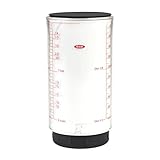
A liquid measuring cup is generally a single open vessel marked for fluid volume. Common sizes include 1 cup, 2 cups, 4 cups, and 8 cups. A 2-cup model is the most practical starting point because it handles water, milk, oil, broth, melted butter, and similar ingredients without taking much cabinet space. The OXO Good Grips Adjustable Liquid Measuring Cup, 2 Cup Capacity, is one example of this format and is priced around $16.95.
Its main advantage is visibility. You can place the cup on the counter, pour in the ingredient, and check the marking from the side. The spout also gives you more control when pouring batter, stock, or oil. Some models use angled markings so you can read the measurement from above rather than bending down to eye level.
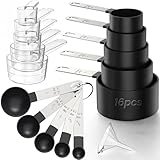
Dry measuring cups usually come as a nested set. Common sizes are 1/4 cup, 1/3 cup, 1/2 cup, and 1 cup, although some sets add 2/3 cup or 3/4 cup. You fill the appropriate cup, sweep off the excess, and add the ingredient to the bowl. This is especially important for flour, brown sugar, cocoa powder, rice, oats, and other ingredients whose volume changes when packed or aerated.
A dry set often includes measuring spoons for amounts such as 1 tablespoon, 1 teaspoon, 1/2 teaspoon, and 1/4 teaspoon. A budget example is the 16PCS Measuring Cups and Spoons Set with metric and U.S. measurements, priced around $6.49. The low price makes this type of set a practical way to add both dry cups and spoons at once, though materials, markings, handle strength, and dishwasher performance can vary.
Neither type automatically produces perfect results. A cup of flour can weigh substantially less when spooned lightly than when compressed into the same cup. If a recipe gives weights, a kitchen scale is often more precise than either volume-based system. Still, correctly using liquid and dry cups makes ordinary recipes more consistent.
Pros
- Better accuracy for everyday recipes: Dry cups can be leveled, while liquid cups let you check the meniscus and avoid filling to an unsafe, spill-prone edge.
- Less mess: Pouring 2 cups of milk into a liquid cup is easier than trying to fill a 1-cup dry measure twice without dripping.
- Faster baking prep: A nested dry set provides 1/4-, 1/3-, 1/2-, and 1-cup measures, so you do not have to repeatedly divide ingredients.
- More control with sticky ingredients: A dry cup is easier to pack and level for brown sugar, while a liquid cup gives you room to pour syrups and oils.
- Useful portion sizes: Measuring spoons handle small amounts that would be awkward or inaccurate in a cup.
- Simple organization: Most dry cups nest together, and many spoon sets either nest or clip together.
Cons
- Extra drawer space: You may be storing one liquid vessel plus four or more dry cups instead of one all-purpose tool.
- More washing: Measuring a recipe with several ingredients can require rinsing both types, especially when switching between flour, oil, and wet ingredients.
- Volume is not weight: Two cups cannot eliminate variation caused by packing, ingredient texture, or differences between brands.
- Some sets are awkward: Handles can be too short, rings can be difficult to separate, and dark markings may fade with frequent washing.
- Not every recipe needs them: If you mostly cook by sight, use packaged ingredients, or rely on a scale, a full volume-measuring setup may sit unused.
- Cheap construction can limit durability: A low-cost plastic set may bend with heavy ingredients or warp in high-heat dishwasher cycles.
Who Should Buy It
Buy both types if you bake at least a few times a month, prepare soups and sauces, or frequently cook from recipes written in U.S. cups and spoons. The combination is particularly worthwhile for bread, cakes, cookies, pancakes, muffins, and dishes that combine multiple dry and liquid ingredients.
It is also a good purchase for new cooks. A basic set removes guesswork without requiring much money: a 2-cup liquid measure can handle most wet ingredients, while a four-piece dry set covers the most common baking quantities. If you are replacing worn-out tools, prioritize clear markings, comfortable handles, stable bases, and measurements that include both U.S. and metric units.
Choose a larger liquid cup—such as a 4-cup model—if you regularly make stock, punch, large batches of sauce, or recipes with more than 2 cups of liquid. Choose a scale as well if you bake bread or pastry often. A scale typically measures in grams and can improve consistency more than buying additional cup sizes.
Who Should Skip It
Skip buying both if you cook mostly by recipes that list ingredients by weight, use meal kits with pre-portioned ingredients, or rarely bake. A kitchen scale and a few measuring spoons may be all you need. You can also manage with one liquid cup if your recipes are forgiving and you are willing to use a spoon to level dry ingredients.
You may not need another set if your existing cups are accurate, readable, and complete. Replacing functional tools solely because they are not the same brand rarely improves cooking. The biggest benefit comes from having the right capacity and a design you will actually use.
Cheaper Alternatives
| Option | Cost | Trade-off |
|---|---|---|
| One 2-cup liquid measuring cup plus measuring spoons | About $8–$20 | Handles liquids and small amounts, but you will need to improvise for larger dry quantities. |
| Budget dry cup-and-spoon set | About $6–$12 | Inexpensive and compact, but plastic quality, markings, and long-term durability may be inconsistent. |
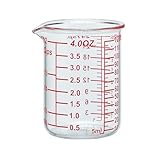
| Single glass liquid cup | About $5–$15 | Easy to clean and often microwave-safe, but heavier and more breakable than plastic. |
| Kitchen scale | About $15–$35 | More precise for baking by weight, but requires recipes with gram measurements and batteries or charging. |
| Tablespoons and teaspoons only | About $3–$10 | Works for small recipes, but slow and impractical for measuring cups of flour, water, or broth. |
For the lowest-cost complete solution, a basic dry cup and spoon set around $6.49 paired with a simple liquid cup is usually enough. A more ergonomic adjustable liquid measure around $16.95 costs more but may be easier to read and pour. The right choice depends less on brand than on capacity, legibility, and whether the tools fit in your storage space.
FAQ
Can I use a dry measuring cup for liquids?
Yes, in a pinch, but it is less convenient and potentially less accurate. Fill the cup while it sits on a level surface, then check the amount at eye level. A dry cup has little extra space, so water, oil, or milk can spill before you move it to the mixing bowl. For amounts larger than 1 cup, repeated filling also increases the chance of error.
Can I use a liquid measuring cup for flour?
You can, but it is not the preferred method. A liquid cup is difficult to level cleanly, and scooping flour directly into it can compact the flour. If you must use one, fluff the flour, spoon it gently into the cup, and sweep off the excess with a straight edge. A scale is better, and a dry cup is more practical for recipes written by volume.
Is a kitchen scale better than measuring cups?
For baking, usually yes. Weight is less affected by how tightly an ingredient is packed, so a recipe calling for 120 grams of flour is more repeatable than one calling for 1 cup. Measuring cups remain convenient for liquids and for recipes written in cups. Many serious bakers use both: a scale for flour and other dry ingredients, and a liquid cup for water, milk, and oils.
What is the minimum measuring setup for a small kitchen?
Start with a 2-cup liquid measuring cup, a dry set containing 1/4, 1/3, 1/2, and 1 cup, and measuring spoons from 1/4 teaspoon through 1 tablespoon. If cabinet space is extremely limited, buy a scale, measuring spoons, and one liquid cup first. Add dry cups later if you begin baking regularly.
Ready to decide? Our #1 pick for 2026 is the One 2-cup liquid measuring cup plus measuring spoons.
Live price & availability on Amazon.





Write Your Review
No reviews yet. Be the first to share your experience!