
Disclosure: As an Amazon Associate we earn from qualifying purchases. We may receive a small commission when you buy through links on this page, at no extra cost to you. We only recommend products we genuinely believe offer value to home cooks.
As an Amazon Associate we earn from qualifying purchases at no extra cost to you.

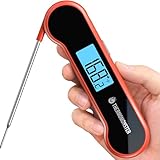


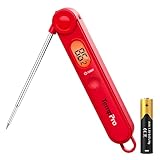

An instant-read meat thermometer is the single fastest way to stop overcooking and serve meat that is safe and juicy. Instead of guessing, you get a precise internal temperature in a couple of seconds, which matters whether you are searing a steak, roasting a chicken, or deep-frying. Below are five instant-read thermometers that consistently earn their spot in serious kitchens, plus a guide to choosing the right one.
| Rank | Product | Best For | Buy |
|---|---|---|---|
| 1 | Lavatools Javelin Instant-Read Thermometer | Compact everyday speed | View on Amazon |
| 2 | Lavatools PT18 Professional Thermometer | Long probe & deep frying | View on Amazon |
| 3 | ThermoPro/TempPro TP19H | Motion-sensing wake & fast reads | View on Amazon |
| 4 | ThermoPro/TempPro TP03H Waterproof | Waterproof grilling | View on Amazon |
| 5 | ThermoPro/TempPro TP03B | Budget backlit pick | View on Amazon |
Top Picks
1. Lavatools Javelin Instant-Read Thermometer
The Javelin folds to a pocketable size yet delivers fast, accurate reads on a large, easy display. It is splash resistant and NSF certified, so it holds up to real kitchen use. For most home cooks, it is the ideal balance of speed, durability, and price.
2. Lavatools PT18 Professional Thermometer
With a longer 4.5-inch probe and an ambidextrous backlit display, the PT18 keeps your hand farther from heat, which is a real plus over a hot grill or a pot of frying oil. It reads quickly and is built for frequent, demanding use.
3. ThermoPro TP19H (now TempPro)
This model wakes the moment you pick it up thanks to a motion sensor, and it delivers a reading in about a second. The waterproof body and rotating backlit display make it comfortable for either hand. It is a feature-rich pick at a friendly price.
4. ThermoPro TP03H Waterproof
A dependable workhorse with a waterproof build that survives splashes and quick rinses. The backlight helps for evening grilling, and the foldaway probe stores neatly. If you want a rugged, no-fuss thermometer for the patio, this is a smart buy.
5. ThermoPro TP03B
The TP03B covers the essentials, a fast read, a backlit screen, and a foldable probe, for a budget-friendly price. It is a great first thermometer or a spare to keep in a second kitchen. Accuracy is solid for everyday cooking.
What Makes a Great Instant-Read Thermometer
Speed: The best models read in 2 to 3 seconds, so you open the oven or lift the grill lid for as little time as possible. Accuracy: Look for a stated tolerance around plus or minus 0.9°F; tighter is better for low-and-slow cooking. Probe length: A longer probe keeps your hand away from heat, useful for deep frying and large roasts. Display: A backlight and an auto-rotating or large screen make readings easy day or night. Build: Water resistance (IP65 or better) means you can rinse the probe without ruining the electronics.
Safe Internal Temperatures to Memorize
Use these USDA-aligned targets as your baseline. Poultry (chicken and turkey) should reach 165°F throughout. Ground meats like beef and pork are safe at 160°F. Whole cuts of beef, pork, lamb, and veal are safe at 145°F with a three-minute rest. Fish is generally done at 145°F. Always insert the probe into the thickest part, away from bone, and check more than one spot on large roasts. A thermometer removes the guesswork that leads to dry, overcooked dinners.
Instant-Read vs. Leave-In Probe Thermometers
Instant-read thermometers are spot-checkers: you insert, read, and remove. They are perfect for steaks, chops, and confirming doneness across a roast. Leave-in probe thermometers stay in the meat through a long cook and often pair with an oven-safe cable or wireless transmitter, which suits briskets, turkeys, and smoking sessions where you want to monitor the climb without opening the door. Many cooks own both, but if you buy one tool first, an instant-read is the more flexible everyday choice.
Understanding Carryover Cooking
One reason a thermometer matters so much is carryover cooking: meat keeps rising in temperature after you remove it from the heat, because the hot exterior continues to transfer energy inward as it rests. A thick roast or a steak can climb another 5 to 10 degrees off the heat, while smaller cuts move less. The practical takeaway is to pull meat a few degrees before your target and let it rest, rather than cooking it all the way to temperature in the pan or oven, which usually means overcooking. An instant-read thermometer lets you catch that early-pull window precisely. Resting also lets juices redistribute, so the meat stays moist when you slice it instead of bleeding onto the board.
Caring for Your Thermometer’s Accuracy
A thermometer is only useful if you trust it, so verify accuracy periodically. The simplest test is the ice-water method: fill a glass with crushed ice, top with cold water, stir, and insert the probe without touching the sides; it should read very close to 32°F. You can also test in boiling water, which reads about 212°F at sea level and lower at altitude. If your model has a calibration function, adjust it; if not, simply note the offset and account for it. Keep the battery fresh, store the probe folded or sheathed to protect the tip, and wipe the probe clean after every use so build-up does not slow the read or harbor bacteria.
Frequently Asked Questions
How accurate are instant-read thermometers?
Quality models are accurate to about plus or minus 0.9°F, which is more than precise enough for safe, well-cooked meat. You can verify yours in ice water, which should read close to 32°F.
Where do I insert the probe?
Into the thickest part of the cut, away from bone, fat, and gristle, since those areas read differently. On large roasts, check two or three spots to confirm the coldest point is done.
Are these thermometers safe to leave in the oven?
Most instant-read models are not designed to stay in a hot oven; they are for quick spot checks. For continuous monitoring, use a leave-in probe thermometer instead.
Can I use one thermometer for frying and candy too?
Many instant-read thermometers handle high frying-oil temperatures, but check the rated range. For sustained candy work, a clip-on candy thermometer may be more convenient.
How do I clean and store it?
Wipe or rinse the probe with hot soapy water after each use, sanitize after raw meat, and fold the probe away for storage. Avoid submerging non-waterproof models.
Related Reading
Pair your thermometer with our guide to how to use a meat thermometer correctly, plus the best kitchen tongs and top basting brushes for grilling and roasting. Stocking a first kitchen? See essential kitchen tools for beginner cooks and the essential kitchen tools list for any cook. For presents, check the best kitchen tools and gadgets for gifts and our must-have kitchen gadgets for home cooks.





Write Your Review
No reviews yet. Be the first to share your experience!