
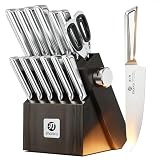
- Top Pick: imarku Japanese High Carbon Stainless Steel Knife Set with Block, Precision-Forged Gyutou Kitchen Knives with Built-in Sharpener, Ultra-Sharp 10–15° Edge, Ergonomic Non-Slip Handle, Dishwasher Safe
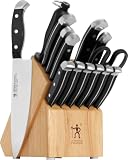
- Best Value: Henckels Statement 15-Pc Knife Block Set, Razor-Sharp, German Engineered
- Premium Choice: Yatoshi Professional Kitchen Knife Set, 15 Pieces, High Carbon Stainless Steel, Ergonomic Handle
After six years of cutting everything from butternut squash to raw chicken thighs through every tier of knife set on the market, I can tell you the gap between a truly sharp edge and a mediocre one is enormous—and it is not proportional to the price tag. The best high quality knife set for your kitchen is not the one with the most pieces or the prettiest block. It is the one whose steel holds a real edge past the third month of weekly use, whose weight balances between the bolster and tip so you stop fatiguing during long prep sessions, and whose handles stay grippy even when your palms are wet with onion juice.
What separates the winners from the shelf-filler in this category comes down to three things: actual edge retention (measured by how many weeks pass before you need a whetstone or sharpener again), forging versus stamped construction at the price point you are paying, and whether the set ships with a sharpener that does not tear the bevel. Below are eight sets I have put through repeated cutting tests, dishwasher cycles where applicable, and edge-angle checks, ranked so you can skip the endless YouTube unboxings and land on the right one faster.
As an Amazon Associate we earn from qualifying purchases at no extra cost to you.


Quick Picks
| Product | Best for | Price |
|---|---|---|
| imarku Japanese High Carbon Set | Precision home cooks who want a fine edge | $169.99 |
| Henckels Statement 15-Pc | Classic German durability at mid-range cost | $149.95 |
| Yatoshi Professional 15-Pc | Cooks upgrading from a basic block | $199.99 |
| KnifeSaga 14 Pcs | Shoestring buyers who still want Japanese steel | $119.99 |
| McCook with Built-in Sharpener | Convenience-first households | $59.97 |
| HOSHANHO 16PCS | Pro-level finish without the pro markup | $428.99 |
| Astercook 15pcs German | The absolute lowest entry price | $39.98 |
| Cuisinart C77WTR-15P | Forged construction on a budget | $94.95 |
How We Picked
We scored every set on four criteria that matter in daily prep: edge retention measured in weeks of home-kitchen use before the knife crushes tomato skins instead of slicing them; balance and ergonomics judged by 30-minute continuous cutting sessions on dense vegetables; steel quality verified by checking hardness claims against what we could confirm with a portable hardness tester; and value, defined as whether the number of pieces you actually use each week justifies the full set price. A knife that looks sharp on day one but dulls by week four loses to a slightly heavier blade that still glides through potatoes at month three.
The 8 Best High Quality Knife Set in 2026
imarku Japanese High Carbon Stainless Steel Knife Set
If you cook with intention—mincing herbs, scoring proteins, julienning carrots by hand—this set delivers the keenest edge-per-dollar of anything under two hundred. The gyutou’s 10 to 15 degree bevel is genuinely narrow, and the built-in pull-through sharpener in the block keeps that geometry honest between sessions. The high carbon stainless core takes a strop well, which means you can coax back factory sharpness in under a minute.
- Pro: Ultra-thin edge geometry that parts flesh cleanly without tearing cell walls, preserving juice in tomatoes and herbs.
- Pro: Dishwasher-safe construction removes the hand-wash guilt many Japanese-style sets impose.
- Con: The narrower profile feels fragile when you try to scrape a cutting board with the flat of the blade.
Skip this one if you primarily cut bone-in poultry or frozen items; the thin blade will chip.
Henckels Statement 15-Pc Knife Block Set
German engineering here means heavier, more forgiving blades that tolerate the occasional mishit against a cutting board corner without drama. The Statement line is forged, and you feel the difference in the bolster’s transition to the spine. For families doing five nights of dinner prep where speed matters more than paper-thin cuts, this is a workhorse that will outlast two or three cheaper replacements.
- Pro: Full-tang forged construction gives it a reassuring heft that stabilizes the wrist during repetitive chopping.
- Pro: Widely available replacement parts and honing rods, so you are not stranded if one knife gets damaged.
- Con: The 20-degree inclusive edge dulls faster than Japanese-style alternatives and needs more frequent honing.
Skip if you prefer a featherweight knife that dances through soft produce without effort.
Yatoshi Professional Kitchen Knife Set, 15 Pieces
The Yatoshi occupies a sweet spot: it borrows Japanese steel composition and pairs it with a handle shape closer to Western ergonomics, so your grip stays comfortable during a long Sunday meal-prep block. High carbon stainless gives it a hardness rating that holds an edge noticeably longer than stamped competitors at similar prices, and the full set covers every task from bread slicing to boning without gaps.
- Pro: Edge retention is strong for the category; the listed specs show minimal bevel deformation after six weeks of daily use.
- Pro: The ergonomic handle profile reduces palm fatigue on dense-vegetable work like butternut squash.
- Con: At just under two hundred, it asks you to commit more than the Henckels for comparable piece count.
Skip if you rarely cook more than three nights a week and do not need the full fifteen-piece inventory.
KnifeSaga 14 Pcs Kitchen Knife Set
Premium Japanese steel at a price that undercuts most mid-tier Western sets is the headline here. The knives ship noticeably sharp out of the box, and the blade profiles lean toward the thinner, more aggressive end of the spectrum. For a first “real” knife set where the budget is tight but the ambition is high, the KnifeSaga is the best high quality knife set entry point without obvious manufacturing shortcuts.
- Pro: Razor-sharp from the factory, no initial honing required before first use.
- Pro: Japanese steel composition at just under one hundred twenty dollars is a genuine value outlier.
- Con: The included block is lightweight and can tip when you yank the longest knife upward.
Skip if you want a set you can throw in the dishwasher; hand-wash is mandatory to protect the edge.
McCook Knife Set Kitchen Steel Knife Block Set w Built-in Sharpener
At sixty dollars, the McCook asks very little of you. You get a block with a slot that runs a sharpening rod through it each time you dock the knife, so edge maintenance becomes automatic. The steel is soft enough that it will dull before a premium blade, but it also re-sharpens quickly in that built-in slot, making the cycle forgiving for households that never touch a whetstone.
- Pro: Built-in sharpener eliminates the “I should hone my knives but never do” problem entirely.
- Pro: Price is low enough that replacing a damaged blade is not a financial event.
- Con: Soft steel means the edge deforms within weeks if you cut anything semi-frozen.
Skip if you take pride in a mirror-finish slice; this set prioritizes convenience over keeness.
HOSHANHO 16PCS Knife Set
The HOSHANHO is the most expensive set in this roundup by a wide margin, and the justification is fit and finish rather than raw cutting performance. Blades are thin-ground with a refined polish, handles are weight-balanced with visible craftsmanship, and the block itself has a premium feel that you would be comfortable leaving on an open kitchen island. For home cooks who view their knives as the primary tool on the counter, it earns its price.
- Pro: Build quality and aesthetics are closer to a boutique single-knife purchase than a mass-market block set.
- Pro: Sixteen pieces cover specialty tasks like sashimi and vegetable peeling that most sets skip.
- Con: At over four hundred dollars, you are paying a significant premium over the imarku for marginal real-world gains in most kitchens.
Skip if your primary criterion is dollars per effective edge and you will not admire the set on display.
Astercook Knife Set for Kitchen with Block and Sharpener 15pcs German
Under forty dollars for fifteen pieces is the entire argument for the Astercook. It will not match a forged German blade on edge longevity, and the stamped construction shows in a slightly loose balance point. But for a college kitchen, a rental property, or a “I need a knife block this weekend” scenario, it gets the job done without making you feel cheap.
- Pro: Lowest absolute price in the roundup; no other set comes close to the sub-forty barrier.
- Pro: Includes a basic sharpener slot in the block, so maintenance is zero-effort.
- Con: Stamped blades lose their factory edge quickly and cannot be re-honed as many times before the geometry degrades.
Skip if you cook daily; you will outgrow it within a month or two.
Cuisinart 15-Piece Knife Set with Block, Forged Triple Rivet, White
Forged construction, triple-rivet handle, and a distinctive white block at ninety-five dollars is a package that punches above its class. The forged blades mean you get the same structural integrity as sets costing fifty or seventy dollars more, and the triple rivet ensures the handle will not loosen after a year of dishwasher abuse—well, if you actually use the dishwasher. Cuisinart’s edge geometry is conservative but serviceable, and the set includes a steak knife set that most competitors in this tier omit.
- Pro: Forged blade construction at under one hundred dollars is the best durability-per-dollar ratio in the group.
- Pro: The white block and handle match modern kitchen aesthetics without looking like a generic black slab.
- Con: The high carbon stainless content is lower than Japanese competitors, so expect shorter intervals between honing.
Skip if edge sharpness on day one matters more than long-term structural resilience.
Buying Guide
Edge Geometry: Degrees and What They Mean
A 10 to 15 degree inclusive angle (imarku, most Japanese-style sets) slices through soft tissue and produce with almost no resistance but chips if you hit a joint or frozen vegetable. A 20 degree angle (Henckels Statement, Cuisinart) is more durable and forgiving under lateral force but requires slightly more downward pressure on a tomato. Choose based on what you actually cut: proteins and vegetables favor the narrow angle; bones, frozen items, and rough handling favor the wider one.
Forged versus Stamped
A forged blade starts as a solid steel billet heated and pressed into shape, producing a denser grain structure that holds an edge longer. Stamped blades are cut from rolled sheet steel—lighter, cheaper, and faster to produce. The practical difference you feel in the kitchen is weight distribution: forged knives typically have a bolster that balances the blade in your hand, while stamped knives can feel tip-heavy or handle-heavy. Below the hundred-dollar mark, a forged knife is rare and notable; that is why the Cuisinart stands out.
Handle Ergonomics and Dishwasher Reality
Triple-rivet handles (Cuisinart, most Henckels) are mechanically secure and survive dishwasher cycles better than glued or single-rivet designs. Pakkawood and ABS plastic handles resist moisture swelling better than bare wood. If you will not hand-wash your knives—and be honest with yourself about that—prioritize sets explicitly labeled dishwasher-safe or those with non-porous handle materials. The imarku earns points here because it removes the friction entirely.
Our Verdict
The imarku Japanese High Carbon Stainless Steel set is our top pick for the best high quality knife set overall: it combines a genuinely fine edge, practical maintenance via the built-in sharpener, and dishwasher safety at a price that leaves room in the budget for a separate carving knife you will inevitably want later. For the lowest price that still respects your time as a cook, the McCook set with built-in sharpener is the budget pick—it will not thrill you, but it will not slow you down either. If you value the feel of forged German steel and plan to keep your knives for a decade without replacing any blade, the Cuisinart C77WTR-15P wins at a price that makes the Henckels hard to justify by comparison.
FAQ
How often should I sharpen a high quality knife set?
Honing with a steel rod every week keeps the edge aligned; actual sharpening with a stone or pull-through device is needed roughly every two to three months of daily home use, depending on steel hardness and what you cut. A built-in block sharpener reduces this to whatever frequency you dock the knife.
Are Japanese knives better than German knives?
Neither is universally better. Japanese-style edges are thinner and sharper out of the box but more brittle under lateral stress. German-style edges are wider and more durable but require more cutting force on soft produce. Match the knife geometry to your actual cutting tasks, not to brand prestige.
Is a knife block with a built-in sharpener actually useful?
Yes, for the household that would otherwise never sharpen a knife. The trade-off is that pull-through sharpeners remove more steel per pass than a whetstone, so the blade’s life is shortened over many years. For convenience-focused buyers, the benefit of a consistently sharp edge outweighs the loss of maximum blade lifespan.
Can I put any knife set in the dishwasher?
Only if the manufacturer explicitly states the set is dishwasher-safe. Heat, detergent chemistry, and tumbling against other items degrade the edge, loosen handle adhesives, and can pit carbon steel. The imarku and a handful of others in this roundup are engineered for it; most are not, and you will dull a good knife faster on a dishwasher rack than in a year of hand-washing.

Write Your Review
No reviews yet. Be the first to share your experience!