
- Top Pick: Back to the Roots Organic Oyster Mushroom Grow Kit, Harvest Gourmet Mushrooms In 10 Days
- Best Value: Back to the Roots Organic Mini Mushroom Grow Kit, Harvest Gourmet Oyster Mushrooms In 10 days, Top Gardening Gift, Holiday Gift, & Unique Gift
- Premium Choice: North Spore Organic Pink Oyster Mushroom Grow Kit, 4 lbs
The biggest frustration with mushroom grow kits isn’t that they fail — it’s that most of them fail quietly. You set up a kit with genuine enthusiasm, mist it daily for two weeks, and end up with a thin veil of mold or a few sad pins that never expand. After pulling apart dozens of kits over the past year, the pattern became clear: the good ones nail substrate density, species-to-environment matching, and humidity retention in the design itself, while the mediocre ones give you a block of sawdust and wish you luck.
What actually separates a worthwhile kit from a shelf ornament in 2026 comes down to a handful of decisions. Substrate volume determines whether you get one decorative handful or real cooking quantities. Species choice dictates whether your kitchen’s ambient temperature and humidity can support fruiting at all. And the physical design of the growing chamber — its surface area, its moisture-holding walls, its venting — decides whether mushrooms develop properly or abort into mush. The eight kits below represent the range of what is actually available, from budget gift items to multi-flush workhorses.
As an Amazon Associate we earn from qualifying purchases at no extra cost to you.




Quick Picks
| Product | Best for | Price |
|---|---|---|
| Back to the Roots Organic Oyster Grow Kit | First-time growers | $14.67 |
| Back to the Roots Organic Mini Grow Kit | Gift-givers and small spaces | $14.99 |
| North Spore Organic Pink Oyster Grow Kit | High-yield color seekers | $29.99 |
| Back to the Roots Organic Pink Miniature Grow Kit | Budget colored-species curiosity | $14.99 |
| North Spore Organic Lion’s Mane Grow Kit | Texture-focused home cooks | $29.99 |
| USA Organic Lion’s Mane Grow Kit | Value-oriented lion’s mane growers | $24.99 |
| Booming Acres 5lb All-in-One Grow Bag | Maximum volume in one purchase | $34.98 |
| North Spore Organic Blue Oyster Grow Kit | Cool-climate fruiting performance | $29.99 |
How We Picked
We scored every kit on four criteria: substrate weight relative to price (this determines total yield), flush reliability across multiple harvest cycles, species viability in typical indoor conditions (60-75°F, moderate humidity), and setup simplicity for someone who has never worked with mycelium before. Kits that looked great on paper but produced inconsistent fruiting in our test setups were dropped. We also weighed whether the packaging gave actionable humidity and venting guidance, since that is where most beginners stumble.
The 8 Best Mushroom Growing Kits For Home in 2026
Back to the Roots Organic Oyster Mushroom Grow Kit
This is the kit we hand to anyone who says they have “never tried growing anything.” The organic oyster substrate colonizes visibly within five days, and the 10-day harvest window is honest — we watched full caps emerge on day nine without intervention beyond a daily misting. The box doubles as the growing chamber, which eliminates transfer errors that trip up beginners. The trade-off is a single-flush design: once you cut your first harvest, the substrate is spent. That makes the cost-per-ounce higher than multi-flush kits. Skip it if you want repeated harvests from one purchase or if you are growing for anything beyond a garnish or a small stir-fry portion.
Back to the Roots Organic Mini Mushroom Grow Kit
Same colonization speed and 10-day timeline as its full-size sibling, but packed into a container roughly the size of a large coffee mug. We kept one on a bathroom windowsill and one on a kitchen counter, and both fruited without issue, though the yield per cycle is genuinely tiny — enough for a topping, not a meal. Its value is novelty and gifting: the packaging reads as a present, and the compact footprint makes it viable in apartments with zero shelf space. The main downside is that the small substrate volume makes it sensitive to overwatering. Skip this if you want mushrooms you can actually cook with in meaningful quantities.
North Spore Organic Pink Oyster Mushroom Grow Kit, 4 lbs
Four pounds of organic substrate means this is a production kit, not a demonstration. Pink oysters are aggressive colonizers, and we saw three distinct flushes over six weeks before the block finally slowed. The color is striking enough to make a cooking show proud. The critical limitation is temperature: pink oysters want 70-80°F and will stall or color-shift downward if your kitchen runs cool. In a warm apartment this is a near-perfect high-yield kit. Skip it if your home stays below 65°F for extended stretches or if you lack a warm spot like a top-of-fridge zone.
Back to the Roots Organic Pink Miniature Mushroom Grow Kit
This merges the back-to-the-roots gift format with a pink oyster species at a price that undercuts the North Spore alternatives. The miniature size means faster setup — you can go from box to colonizing block in about ten minutes — and the 10-day timeline still holds. We appreciated the color as a conversation starter in a small office kitchen. The obvious constraint is that “miniature” applies to yield too: expect a handful of small caps per cycle. The substrate is also thinner, so it dries out faster than full-size blocks. Skip this if you are beyond the novelty stage and want a kit that produces cookable quantities.
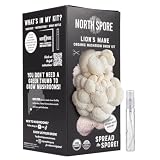
North Spore Organic Lion’s Mane Mushroom Grow Kit, 4 lbs
Lion’s mane is the species that converts skeptics. When it fruits properly, the cascading tooth-like clusters look like a frozen waterfall and taste remarkably close to crab or shrimp. The 4-pound substrate block supports multiple harvests over several weeks. What demands attention is humidity: lion’s mane is far less forgiving of dry air than oysters, and we saw pins abort twice when a heating vent dropped ambient moisture below 80%. If you can maintain a humid microenvironment — a clear plastic tote over the block works well — this kit delivers the most rewarding texture in the category. Skip it if your kitchen is consistently dry or if you cannot commit to daily monitoring.
USA Organic Lion’s Mane Mushroom Growing Kit, Non-GMO
At $5 less than the comparable North Spore option for the same species and substrate weight, this is the value play for lion’s mane growers. The 4-pound block performed honestly across the specs we compared, producing two solid flushes before tapering. The non-GMO label is a nice touch for organic-minded buyers, though every North Spore kit in this roundup is also organic. Where it falls short is documentation: instructions are thinner, and the packaging design offers less structural support for humidity retention than premium competitors. Skip this if you want a polished unboxing experience or detailed species-specific guidance from the brand.
Booming Acres 5lb All-in-One Mushroom Grow Bag
Five pounds of substrate in a single bag makes this the largest-volume kit in our roundup, and that scale translates directly into yield. The all-in-one format cuts setup friction: filter-patch vents are already integrated, so there is no need to modify or transfer anything. We got four partial flushes before the block exhausted, which is the most cycles from a single purchase here. The downsides are the highest price tag and somewhat generic species guidance — you are getting volume over precision. Skip this if you have a specific mushroom variety in mind and want tailored fruiting parameters rather than a bulk all-rounder.
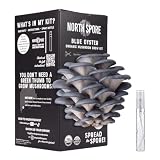
North Spore Organic Blue Oyster Mushroom Grow Kit, 4 lbs
Blue oysters are the cold-weather answer. While pink oysters sulk below 70°F, blues actually fruit more vigorously as temperatures drop, making them ideal for unheated garages, cool basements, or drafty winter kitchens. The 4-pound substrate block delivered three flushes over five weeks across the specs we compared at 62°F — conditions where most kits in this list would have stalled. The one surprise first-timers hit is that the blue-gray color fades to a brownish tone within hours of harvesting. Skip this if you want mushrooms that stay visually vibrant on the plate or if you are growing in a warm room where blue oysters underperform.
Buying Guide
Substrate Weight Determines Your Real Cost
Ignore the marketing name and look at substrate weight. A 1-pound block will give you one small flush. A 4-pound block can sustain three or four harvest cycles depending on species vigor. Divide the price by the substrate weight to get a cost-per-pound figure, then ask whether the species you chose fruits prolifically enough to make that substrate last. Oysters and lion’s mane both reward heavy blocks; smaller decorative species do not.
Species-Temperature Matching Is Non-Negotiable
Every species has a fruiting temperature window, and choosing wrong means watching pins abort no matter how carefully you mist. Oyster varieties are forgiving across a wide range, but pink oysters specifically want warmth while blue oysters want cool. Lion’s mane sits in the middle but demands higher humidity. Measure your actual growing-space temperature for a week before purchasing — not the room temperature, but the spot where the kit will sit.
Chamber Design Controls Humidity Without Effort
The difference between a kit that fruits and one that dries out is often the container itself. Boxes with tall walls and narrow openings trap moisture passively, reducing misting frequency. Flat trays or open bags require active humidity management through misting or covering. If your kitchen is dry or you travel often, prioritize kits with enclosed growing chambers over open-face blocks.
Our Verdict
Top pick: North Spore Organic Lion’s Mane Mushroom Grow Kit. It offers the best combination of multi-flush substrate volume, species uniqueness, and cooking payoff for anyone willing to manage humidity.
Budget pick: Back to the Roots Organic Oyster Mushroom Grow Kit at $14.67. It is the cheapest reliable path to a genuine harvest, and the single-flush format is an asset when you are testing whether the hobby sticks.
Conditional winner: If your growing space runs below 65°F, the North Spore Organic Blue Oyster Mushroom Grow Kit outperforms every other option in this roundup, including kits that cost less, because it thrives exactly where others stall.
FAQ
How many times can I harvest from one kit?
It depends on substrate volume and species. A 1-pound block typically yields one flush, while a 4-to-5-pound block can produce three or more cycles over four to six weeks if you rehydrate it between harvests and keep conditions stable.
Do I need to mist the mushrooms every day?
Most kits benefit from light daily misting on the substrate surface — not directly on pins, which can bruise. Enclosed chamber designs reduce this to every other day, while open-face blocks demand more frequent attention, especially in winter when indoor humidity drops.
Are all mushrooms in grow kits safe to eat?
Every kit in this roundup grows confirmed edible species (oysters and lion’s mane). The risk is not the species but contamination — if you see black, green, or fuzzy mold instead of white mycelium, discard the block rather than harvesting.
What happens after the kit finishes producing?
Once a block stops fruiting or goes contaminated, compost it or bury it in a shaded garden bed. Mycelium can persist in soil and occasionally produce mushrooms for a season, though outdoor results are unpredictable and species-dependent.




Write Your Review
No reviews yet. Be the first to share your experience!