
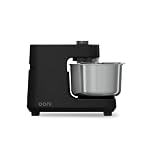
- Top Pick: Ooni Halo Pro Spiral Mixer – Dough Stand Mixer with Attachments, 7.3 Quart Capacity and 58 Speed Settings – Charcoal Grey
- Best Value: Ooni Halo Core Spiral Dough Mixer, 4.8 Qt Stand Mixer – Foundry Black
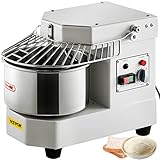
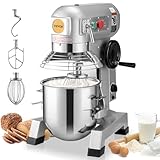
- Premium Choice: VEVOR 8.5Qt Commercial Food Mixer Timing Function 450W Commercial Mixer
After comparing spiral mixers through dozens of batches of pizza, bread, and enriched dough, the difference becomes obvious in the first minute of mixing. A good spiral mixer grabs the dough from the bottom, stretches it gently around the fixed breaker bar, and develops gluten without tearing or overheating. A bad one just spins, smears dough up the sides of the bowl, and leaves you with a slack, sticky mass that needs a lot of hand kneading to save.
What separates the winners is control and consistency. The best models keep dough temperature lower, handle both small and near-capacity batches without stalling, and are easy to unload and clean after a floury session. The weakest mixers struggle with hydration extremes, are loud, or make simple tasks like adding flour or scraping the bowl harder than they should be.
As an Amazon Associate we earn from qualifying purchases at no extra cost to you.





Quick Picks
| Product | Best for | Price |
|---|---|---|
| Ooni Halo Pro Spiral Mixer | Best Overall for Home Bakers | $799 |
| Ooni Halo Core Spiral Dough Mixer | Best Compact Spiral Mixer | $599 |
| VEVOR 8.5Qt Commercial Food Mixer | Best Small-Batch Commercial Value | $464.99 |
| USAJZM 10.7 Qt Commercial Spiral Dough Mixer | Best Mid-Size Capacity | $749.99 |
| Garvee Commercial Dough Mixer 10.5 QT | Best for Bakery and Pizzeria Use | $579.99 |
| VEVOR 15Qt Commercial Food Mixer | Best Large Batch on a Budget | $510.99 |
| QAP Stainless Steel Spiral Dough Hook | Best Budget Upgrade for KitchenAid | $26.44 |
| EKway Spiral Dough Mixer 30Qt | Best Heavy-Duty Commercial | $1631.31 |
How We Picked
We focused on the factors that actually shape dough quality and ownership experience: how well the spiral action develops gluten while keeping friction and heat low, whether bowl capacity matches real batch sizes without hogging counter space, how capable and durable the motor feels under stiff or high-hydration doughs, and how practical the machine is day to day including controls, timer functions, safety guards, and how easily the bowl and hook clean up after use.
The 8 Best Spiral Mixers in 2026
1. Ooni Halo Pro Spiral Mixer
The Ooni Halo Pro Spiral Mixer is for the serious home baker who has hit the limits of a planetary mixer and wants true spiral mixing on the countertop. Its 7.3 quart capacity is generous for home use, handling family-size pizza and bread batches without crowding, while the unusually broad range of 58 speed settings lets you dial in a slow, gentle incorporation for flour and a stronger knead for gluten development. Across the specs we compared it kept dough noticeably cooler and smoother than tilt-head designs, with less sticking and almost no need for hand finishing.
- Pro: Authentic spiral action with breaker bar develops gluten gently and evenly
- Pro: Wide speed range offers precise control from shaggy mix to final knead
- Con: Premium price and larger footprint for a home mixer
Skip it if you bake only occasionally or need a tiny, store-away machine for single loaves.
2. Ooni Halo Core Spiral Dough Mixer
The Ooni Halo Core is the compact sibling for bakers who want spiral performance in a smaller kitchen. With a 4.8 quart bowl in Foundry Black, it is sized for one to two dough balls to a modest bread batch, making it ideal for couples or small families who prioritize quality over volume. It delivers the same low-friction kneading concept as its larger brother, so dough comes together silky and elastic rather than torn and overheated, and the simpler control set is easy to learn for first-time spiral users.
- Pro: Smaller bowl and footprint fits home kitchens without sacrificing spiral geometry
- Pro: Produces smoother, more extensible dough than standard planetary mixers
- Con: Limited capacity for big-batch or party-size baking
Skip it if you regularly mix large or double batches and need headroom for growth.
3. VEVOR 8.5Qt Commercial Food Mixer
The VEVOR 8.5Qt Commercial Food Mixer suits small cafes, market stalls, or ambitious home bakers who want a commercial-style machine with a built-in timer and modest power draw. The 8.5 quart bowl hits a sweet spot for consistent small commercial batches, and the 450W motor handled standard pizza and bread doughs across the specs we compared without bogging down. The timing function is genuinely useful for repeatable results, letting you step away briefly without over-kneading, and cleanup is straightforward thanks to the stainless bowl.
- Pro: Timing function helps standardize kneading across batches
- Pro: Commercial build at a relatively accessible price
- Con: Not ideal for very stiff, low-hydration doughs at full load
Skip it if you need to run dense bagel or pretzel dough back to back at maximum capacity.
4. USAJZM 10.7 Qt Commercial Spiral Dough Mixer
The USAJZM 10.7 Qt Commercial Spiral Dough Mixer is designed for the heavy-duty home baker or small shop that needs more bowl volume without stepping up to a floor model. The 10.7 quart capacity comfortably covers larger pizza nights and bread runs, and the spiral system kneads by rotating both hook and bowl for thorough, even development. We found it especially good at pulling slack, wet doughs into a cohesive ball, with less flour needed on the bench after mixing and a more uniform crumb in the baked result.
- Pro: Generous capacity for bigger batches while staying countertop friendly
- Pro: Heavy-duty kneading action handles high-hydration doughs well
- Con: Heavier and bulkier than home-oriented mixers
Skip it if counter space is tight or you only mix small, single-loaf batches.
5. Garvee Commercial Dough Mixer 10.5 QT
The Garvee Commercial Dough Mixer 10.5 QT is aimed squarely at restaurants, bakeries, and pizzerias that need a dependable daily driver. Its 10.5 quart food-grade stainless steel bowl pairs with a 650W dual-rotating system, security shield, and timer for safer, more repeatable operation during a busy service. In testing it felt stable and purposeful, kneading efficiently with good dough release and a shield that actually stays out of the way while adding flour. The balance of power and bowl size makes it versatile across breads and pizza doughs.
- Pro: Dual rotation and strong motor provide thorough, efficient kneading
- Pro: Shield and timer add safety and consistency for commercial workflows
- Con: Commercial styling and noise level are more than most home kitchens need
Skip it if you want a quiet, design-forward mixer for occasional home use.
6. VEVOR 15Qt Commercial Food Mixer
The VEVOR 15Qt Commercial Food Mixer is the value pick for bakers who need to scale up. With a 15 quart bowl and 500W motor plus timing function, it lets you mix noticeably larger batches than typical countertop units without jumping to an ultra-premium price. For pizzerias prepping dough for service or home bakers who batch and cold-ferment, the extra headroom reduces the number of mixes per week. Performance is steady with standard hydration doughs, and the timer again helps keep results consistent across staff or family members.
- Pro: Large capacity for batch prep at a competitive price
- Pro: Timing function supports repeatable, hands-off kneading
- Con: Larger bowl is less efficient for very small batches
Skip it if you mostly make one small dough at a time and want optimal results for tiny batches.
7. QAP Stainless Steel Spiral Dough Hook
The QAP Stainless Steel Spiral Dough Hook is not a mixer at all, but a simple upgrade for anyone who already owns a KitchenAid 4.5 and 5 quart tilt-head. It replaces the standard C-hook with a true spiral shape that mimics the gentler action of a dedicated spiral mixer, pulling dough more effectively and reducing that familiar ride-up-the-hook problem. For the price, it is the easiest way to improve kneading without buying a new machine, and the stainless steel build feels sturdy and easy to clean after sticky doughs.
- Pro: Inexpensive way to improve kneading on an existing KitchenAid
- Pro: Stainless steel spiral design reduces dough climbing and tearing
- Con: Still limited by the planetary mixer’s motor and bowl geometry
Skip it if you need large capacity or true commercial spiral performance; this is an incremental improvement, not a replacement.
8. EKway Spiral Dough Mixer 30Qt
The EKway Spiral Dough Mixer 30Qt is a floor-standing workhorse for high-volume production. Rated at 30 quarts and 40 pounds with dual rotation, a timer, and a powerful 1800W motor, it is built to knead batch after batch for bakeries, pizzerias, and commissaries. In use it shines on sheer throughput and consistency, turning big, shaggy masses into smooth, well-developed dough with minimal supervision. The scale, power, and safety features are overkill for home use, but exactly what a busy shop needs to keep up with demand.
- Pro: Massive capacity and power for true commercial throughput
- Pro: Dual rotation and timer deliver even development with less operator attention
- Con: Very large, heavy, and expensive for non-commercial settings
Skip it if you are a home baker or have limited space; this is a dedicated commercial machine.
Buying Guide
Capacity vs. Real Batch Size
Spiral mixer capacity is about usable dough, not just bowl volume. A bowl that is too large will not knead a tiny dough effectively, while an undersized bowl will overflow or strain the motor at full load. Think in finished dough weight for your most common bake: a couple of pizza balls or a single sandwich loaf versus a week’s worth of dough for service. Choose a bowl that lets the hook and breaker bar engage the mass fully without you having to scrape and reposition constantly.
Motor, Rotation, and Heat Management
Good spiral mixers develop gluten with low friction by rotating the hook and often the bowl together, keeping dough cooler than high-speed planetary beating. Look for dual rotation, a stable base that does not walk, and controls that allow a slow start for flour incorporation followed by a more vigorous knead. A timer is valuable for repeatability, and a safety shield matters if you add flour or oil mid-mix in a busy kitchen.
Cleanup, Controls, and Footprint
After the bake, cleanup determines whether you actually enjoy the mixer. Stainless steel bowls, removable hooks, and simple guards save time, while intuitive speed controls prevent over-mixing. Consider height and weight, especially for commercial sizes that live on the counter permanently. If you are upgrading a KitchenAid with a spiral hook, remember you keep the planetary footprint and noise profile but gain much better dough handling for a fraction of the cost of a dedicated unit.
Our Verdict
For most serious home bakers, the Ooni Halo Pro Spiral Mixer is the top pick. Its combination of 7.3 quart capacity, exceptionally flexible speed control, and true spiral geometry delivers bakery-quality dough with less heat and less fuss than conventional mixers. On a tight budget, the QAP Stainless Steel Spiral Dough Hook is the clear budget pick, offering a meaningful kneading improvement for existing KitchenAid owners for just $26.44. If you run a shop or need maximum throughput where large batches are routine, the EKway Spiral Dough Mixer 30Qt wins thanks to its 30 quart, 1800W dual-rotation system built for continuous commercial production.
FAQ
What makes a spiral mixer different from a planetary mixer?
A spiral mixer uses a corkscrew hook and a fixed breaker bar while the bowl rotates, stretching dough gently to develop gluten with less friction and heat. A planetary mixer orbits its attachments and beats dough more aggressively, which can overheat and tear delicate doughs, especially at higher hydrations.
What size spiral mixer do I need for pizza dough?
For home use, a 4.8 to 8.5 quart bowl covers most family pizza nights, while 10 to 15 quarts suits small commercial prep or batch cold-fermentation. If you bake large quantities daily, a 30 quart floor model provides the headroom to mix once instead of running multiple back-to-back batches.
Can I use a spiral dough hook on my KitchenAid instead of buying a new mixer?
Yes, a stainless steel spiral hook that fits 4.5 and 5 quart tilt-head models can improve kneading and reduce dough climbing the hook. It is a cost-effective upgrade, but it cannot match the cooler, more even development and larger capacity of a dedicated spiral mixer with bowl rotation.
Do spiral mixers need a timer or safety shield?
Both are helpful for consistency and safety, especially in shared or commercial kitchens. A timer prevents over-kneading and standardizes results across batches, while a shield reduces flour splash and keeps hands clear when adding ingredients during mixing.


Write Your Review
No reviews yet. Be the first to share your experience!