
A block of tofu straight from the package holds a surprising amount of water. Press that water out and everything improves: the block turns dense and chewy, marinades soak in deeper, and a hot pan gives you crisp edges instead of steam. The old method of stacking plates and cans works, but it slides around, makes a mess, and applies uneven pressure. A dedicated tofu press holds the block square, drains the water where it belongs, and frees up your counter.
As an Amazon Associate, we earn from qualifying purchases.
Quick Answer
The Tofuture Tofu Press is the best tofu press for most cooks. Its box design collects drained water in a container, fits 8 to 12 ounce blocks, and needs no springs or bands. The EZ Tofu Press is the quickest, finishing a block in 15 minutes or less with two tension knobs. The NOYA Adjustable Tofu Press suits silken and extra-firm blocks alike, with a dial to set the force.
How to Choose
Begin with the mechanism, because it decides how much attention the press needs. Box presses use a lid and elastic bands or a spring to squeeze the block inside a container, so you can set the block in place and walk away. Plate presses use two flat plates joined by screws or knobs; you tighten them every few minutes, which gives you more control but asks for more involvement. Weight presses use a heavy slab of steel or stone that simply sits on the block, with no moving parts at all.
Match the press to the tofu you buy most. Standard grocery blocks run 8 to 16 ounces, and most presses are sized for that range. A press that fits 8 to 12 ounce blocks suits the usual supermarket block, while a wider plate press handles larger blocks and blocks cut in half. Silken tofu is delicate and crumbles under heavy force, so it needs a press with gentle, adjustable pressure or a shallow setting. Extra-firm tofu can take the strongest spring setting and benefits from a longer press.
Check how the water leaves the block. A press with a drip tray or an outer container keeps the drained water away from the tofu and off your counter. Open trays are easy to empty, while enclosed boxes keep the whole job tidy in the fridge. A pour spout or a removable tray makes emptying simpler, and a lid that doubles as a marinating cover adds value.
Think about cleanup and storage. Dishwasher-safe plastic parts are the easiest to maintain, and a press that comes apart fully dries faster. Bamboo presses need thorough drying before storage, and steel presses need drying to stay bright. Compact box presses stack neatly in a cabinet, while plate presses with long bolts take up more room.
Material matters for feel and longevity. BPA-free plastic is light and easy to clean. Bamboo feels warm and natural and suits cooks who avoid plastic. Stainless steel is the most durable option and the heaviest, which is exactly the point for a weight press. Whatever the material, look for smooth edges, a stable base, and parts that fit together without wobble.
Best Tofu Presses
Tofuture Tofu Press — Best Overall

The Tofuture is the press most tofu guides reach for first, and the design explains why. It is a three-part box: an outer container, an inner drainer, and a lid with silicone bands that apply steady pressure. Water collects in the outer container, so nothing drips on the counter and the block never sits in its own moisture. The whole unit fits in the fridge, which means you can press a block overnight and cook with it the next day.
Specs
- Material: BPA-free plastic; Fits: 8 to 12 ounce blocks; Dimensions: 6 x 5 x 2.8 inches; Drain time: about 30 minutes; Care: Dishwasher safe; Design: 3-part box with silicone bands and drip container
The press works on a simple idea. Set the block in the inner drainer, fit the lid, and let the bands do the work while the water drains below. Three adjustable levels let you change the force for softer or firmer blocks. The compact size is a genuine advantage in a small kitchen, and the silicone lid doubles as a cover for marinating the pressed block right in the container. Cooks who press tofu several times a week will value how little fuss this design adds to the routine: no plates to balance, no cans to stack, and no puddle to wipe up.
EZ Tofu Press — Best Simple Screw Press

The EZ Tofu Press is two plates, two threaded posts, and two knobs, and that simplicity is its strength. You place the block between the plates, center it with the printed marks, and tighten the knobs every few minutes. There are no springs to wear out and no bands to snap, so the mechanism stays consistent for years. The stainless steel grommet on the top plate keeps the posts turning smoothly and keeps plastic away from the food.
Specs
- Material: Plastic with stainless steel grommet; Made in: USA; Fits: Most brick sizes, small and large; Dimensions: 9 x 5.25 x 4 inches; Drain time: 15 minutes or less; Care: Dishwasher safe; Design: 2-plate screw press with tension knobs
Speed is the reason to pick this one. The listing promises a pressed block in 15 minutes or less, which suits weeknight cooking when dinner cannot wait an hour. The trade-off is attention: you need to return and tighten the knobs as the block compresses. In exchange you get precise control over the force, which helps when you want a block pressed firm but not crushed. The open plate design also fits blocks of different sizes, including blocks cut in half for two smaller portions.
NOYA Adjustable Tofu Press — Best Adjustable Press
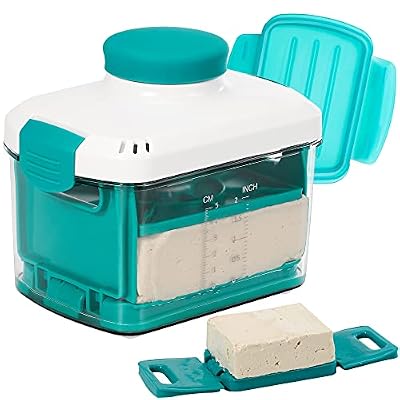
The NOYA press suits cooks who press more than one kind of tofu. A central dial twists to set the force, and a stainless steel spring applies it evenly across the block. The spring is strong enough for extra-firm tofu yet gentle enough at a low setting for silken blocks, which is a range few presses cover. The result is an even, crack-free block rather than one that is firm in the middle and soft at the edges.
Specs
- Material: BPA-free plastic with stainless steel spring; Press time: 10 to 30 minutes; Works with: Silken, firm, and extra-firm tofu; Features: Central dial, openable U drip tray, pour spout, depth-marked water catcher; Includes: Cheesecloth; Care: Dishwasher safe
Thoughtful details set this press apart. The openable U-shaped drip tray lets you slide the block in and out without breaking it, and the base keeps the pressed tofu above the drained water. A pour spout on the lid lets you tip the water out without opening the press and disturbing the block. Depth marks on the water catcher show how much liquid has come out, which helps you learn how long your usual brand needs. The included cheesecloth lines the press for very soft blocks.
Raw Rutes Tofu Press (Ninja) — Best Stainless Steel Press
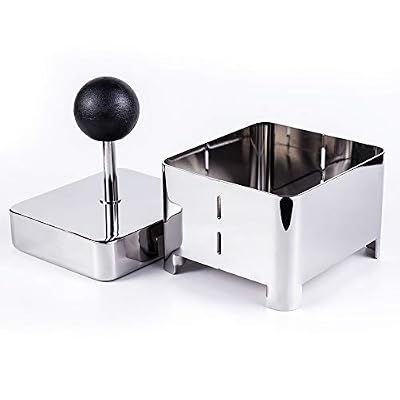
The Raw Rutes press takes a different approach from every other pick here: it has no spring, no bands, and no screws. It is a heavy slab of stainless steel, handmade in the USA, that presses the block with its own weight. Nothing can wear out because there are no moving parts. The same tool also works as a mold for making tofu or paneer from scratch, which makes it the most versatile pick in this guide.
Specs
- Material: Stainless steel; Made in: USA; Design: Weight press, no springs, bands, or plastic parts; Use: Press store-bought blocks or mold fresh tofu and paneer; Care: Hand wash and dry
This is the press for cooks who dislike plastic and want a tool that lasts indefinitely. The weight applies slow, even pressure, and the steel surface wipes clean. It is heavier than the other picks and takes up more room in a drawer, so it suits a cook with cabinet space to spare. The dual use as a tofu and paneer mold also suits cooks who make fresh curds at home and want one tool for both jobs. If you press tofu daily and want the most durable option available, this is the one to buy once and keep.
Yarkor Tofu Press — Best Budget Spring Press

The Yarkor press is the budget pick that still behaves like a proper spring press. A spring delivers about 10 kilograms of pressure with handles on both sides, so the force stays even and the block keeps its shape. A transparent drip tray shows the water collecting as you go, and the tray detaches for easy emptying and cleaning. A cookbook comes in the box for cooks who are new to tofu.
Specs
- Material: BPA-free plastic; Pressure: Spring design, about 10 kilograms; Press time: 10 to 20 minutes; Features: Transparent drip tray, side handles, detachable tray; Includes: Tofu cookbook; Care: Dishwasher safe except spring
Set it and leave it is the whole appeal. Place the block, close the lid, and let the spring work while you prep the rest of dinner. The transparent tray is genuinely useful: you can see at a glance whether the block has given up most of its water. The press is compact enough for a small kitchen and light enough to store on a shelf. For a first tofu press, or for a cook who wants a spare for a vacation rental or a second home, this is the easiest way to spend less and still get firm, well-pressed tofu.
Who Should Skip It
A tofu press is not for every kitchen. If you cook tofu once a month or less, the plate-and-can method works well enough and costs nothing. Cooks who only buy pre-pressed or extra-firm tofu that is already dense may find the difference too small to justify another gadget. Very small kitchens with no spare cabinet space may also pass, since even the most compact press needs a home.
Silken tofu lovers should think carefully too. Most presses are built for firm and extra-firm blocks, and only the adjustable models handle silken tofu without breaking it. If your cooking leans on soft, delicate tofu for soups and desserts, a press will sit unused. Finally, if you prefer marinating unpressed tofu and letting it absorb sauce slowly, pressing is optional rather than essential.
FAQ
How long should I press tofu?
Most blocks need 15 to 30 minutes in a press. The EZ Tofu Press finishes in 15 minutes or less, the Yarkor and NOYA presses take 10 to 30 minutes, and the Tofuture takes about 30 minutes. Extra-firm tofu benefits from a longer press, while a quick 15 minute press is enough for a weeknight stir fry. Pressing overnight in the fridge gives the firmest result.
Can I press silken tofu?
Yes, but only with a gentle, adjustable press. The NOYA Adjustable Tofu Press has a dial that sets a low force for silken blocks, and its cheesecloth lining helps keep delicate tofu intact. Avoid strong spring presses and heavy weight presses for silken tofu, since they can crack or crush the block. For soups and blended dishes, silken tofu often needs no pressing at all.
Do I need to press tofu before marinating?
Pressing first makes a real difference. A pressed block has empty space where the water used to be, so it absorbs marinade far better than an unpressed block. Press the block, then soak it in the marinade for at least 15 minutes, or overnight in the fridge for the deepest flavor. The Tofuture and NOYA presses both double as marinating containers, which keeps the job in one dish.
How do I clean a tofu press?
Most plastic presses are dishwasher safe, including the Tofuture, EZ, NOYA, and Yarkor models. Take the press apart first so water reaches every surface, and let the parts dry fully before storing. Bamboo presses need hand washing and thorough drying. Stainless steel presses should be washed by hand and dried right away to keep the surface bright.
Final Verdict
The Tofuture Tofu Press is the best tofu press for most kitchens because it is tidy, compact, and easy to live with. The EZ Tofu Press wins on speed, the NOYA press wins on adjustability, the Raw Rutes press wins on durability, and the Yarkor press wins on value. Pick the one that matches how often you cook tofu and how much control you want, and the difference in your cooking will show up the first time you sear a properly pressed block.
Product and ASIN Reference
| Product | ASIN |
|---|---|
| Tofuture Tofu Press | B01698J0RU |
| EZ Tofu Press | B007LLGMG2 |
| NOYA Adjustable Tofu Press | B088D3NV7S |
| Raw Rutes Tofu Press (Ninja) | B00DBDUU6M |
| Yarkor Tofu Press | B07ZR8KF4C |
Write Your Review
No reviews yet. Be the first to share your experience!